



5 mins read
|
10-30-2026
AngularJS and ReactJS: Which Framework Should We Use?
Summer Nguyen | 01-16-2025
In web development, there are many technologies, frameworks, and tools. Choosing the right one can be tough. For front-end development, JavaScript offers many options like VueJS, TezJS, and Svelte. However, Angular and React are the most popular.
But, which framework should we use? To help you decide, we will compare these two frameworks. This article aims to help you answer the question: which one is better? So, which one should you choose: Angular or React? Let’s discover it in this article!
What is AngularJS?
AngularJS is a free framework for building dynamic web apps. It was created in 2009 by Misko Hevery and Adam Abrons. Google maintains it now. The latest version is 1.2.21.
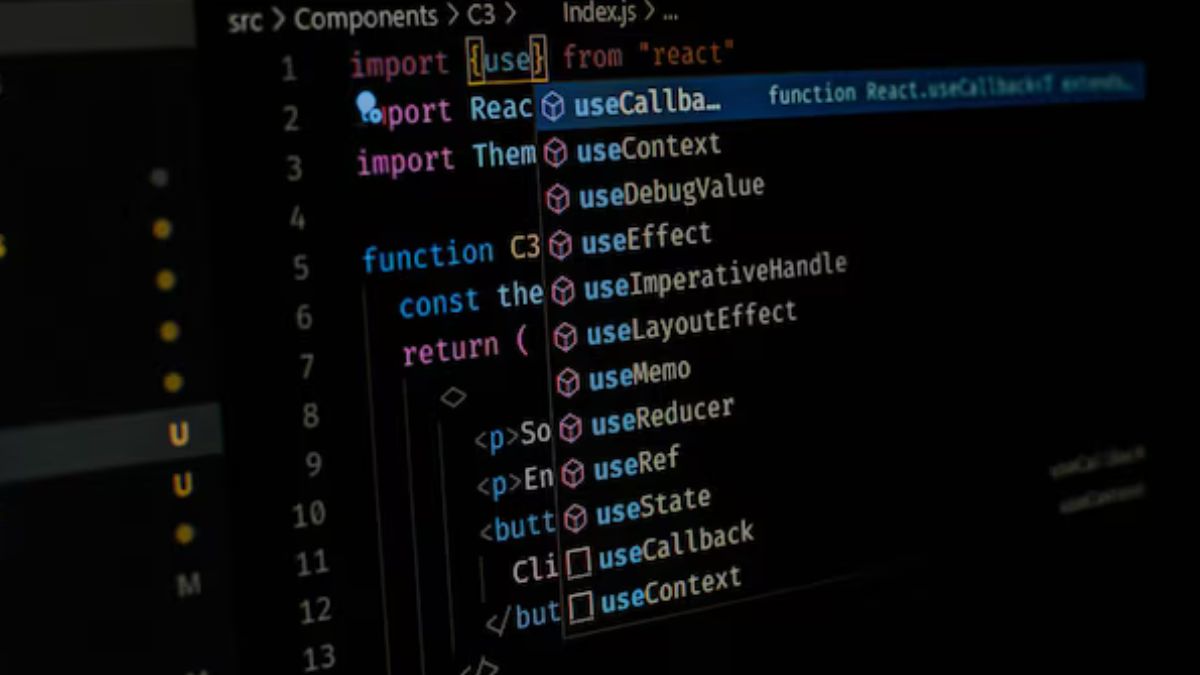
AngularJS includes 3 major parts:
- ng-app: Connects an AngularJS app to HTML.
- ng-model: Links AngularJS data to HTML input fields.
- ng-bind: Connects AngularJS data to HTML tags.
It uses HTML as a template language and extends HTML’s syntax to clearly express your app’s components. This framework reduces the amount of code you need to write by using data binding and dependency injection. Everything runs in the browser, making it compatible with any server technology.
HTML is great for static documents but not for applications. AngularJS bridges this gap by adding new HTML constructs. It introduces directives like:
- Data binding with .
- DOM control structures for repeating, showing, and hiding elements.
- Form support and validation.
- Attaching new behaviors to DOM elements, like event handling.
- Grouping HTML into reusable components.
AngularJS simplifies building web apps by handling the DOM and AJAX code. So, it is very easy to create CRUD (Create, Read, Update, Delete) applications.
Core Features of AngularJS
Here are the main features of AngularJS:
- Data-binding: Automatically syncs data between the model and view.
- Scope: Objects that connect the controller and view, acting as glue.
- Controller: JavaScript functions tied to a specific scope.
- Services: Built-in services like $http for making HTTP requests. These are single-use objects.
- Filters: Select items from an array and return a new array.
- Directives: Markers on DOM elements (like elements, attributes, CSS). They create custom HTML tags. Examples include ngBind and ngModel.
- Templates: Rendered views with data from the controller and model. Can be single or multiple files.
- Routing: Switches between different views.
- Model View Whatever (MVW): A design pattern that divides an app into Model, View, and Controller. AngularJS uses a variation called MVVM (Model-View-ViewModel).
- Deep Linking: Encodes the app’s state in the URL for bookmarking and restoring.
- Dependency Injection: Helps create, understand, and test apps easily with built-in support.
Verdict: Overall, AngularJS simplifies web development by providing efficient tools for data management, UI updates, and app structure.
Advantages and Disadvantages of AngularJS
AngularJS is a powerful framework designed for building Single Page Applications (SPAs). Let’s discover the advantages of its:
- It helps create Single Page Applications that are easy to maintain.
- It allows HTML to bind data, giving users a rich and responsive experience.
- AngularJS code can be tested easily.
- It uses dependency injection and separates different parts of the application.
- It offers reusable components.
- Developers can achieve more with less code.
- Views are pure HTML, and controllers in JavaScript handle the business logic.
- AngularJS apps work on all major browsers and smartphones, including Android and iOS devices.
In essence, AngularJS streamlines development with less code, easy testing, and broad compatibility across major browsers and mobile platforms.
Next to its advantages, it also has some disadvantages that you need to know:
- Not Secure: Since AngularJS is a JavaScript-only framework, applications built with it are not secure. Server-side authentication and authorization are necessary to protect the application.
- Not Degradable: If a user disables JavaScript, the application won’t display anything except the basic page.
Verdict: In general, while AngularJS offers many benefits, it’s important to address its security limitations and dependency on JavaScript for a fully functional application.
What is ReactJS?
React JS is a JavaScript framework used to create user interfaces. It is also known as React or React JS. Plus, React has a component-based architecture. This allows developers to create reusable UI components. This approach improves code organization and makes maintenance easier. Because of this, React is popular for front-end development.

React JS is easy to learn because it uses plain JavaScript and a component-based method. Developers can pick it up quickly.
Moreover, React libraries work as a client-side framework. They handle the UI and send data requests to the back end.
Core Features of ReactJS
ReactJS offer some main feature:
- Virtual DOM: Only updates necessary parts of the real DOM, making it faster.
- Components: Reusable code blocks that build complex UIs, each with its own state.
- Unidirectional Data Flow: Data moves from parent to child components, making it easier to manage.
- JSX: Lets you write HTML-like code in JavaScript, making UI creation simpler.
- Cross-Platform: Works on websites, mobile apps, and virtual reality.
- State Management: Uses hooks for managing state; Redux and MobX can handle bigger projects.
- Routing: Supports multi-page apps with libraries like React Router.
- API Interaction: Supports HTTP requests to remote APIs; you can use libraries like Axios and Fetch.
Depending on these core features, ReactJS makes UI development easier. It updates quickly, uses reusable parts, and manages state easily. It works on many platforms and is good for complex projects.
Advantages and Disadvantages of ReactJS
ReactJS has seen many improvements recently and is now a popular front-end technology. Let’s look at its advantages:
- Virtual DOM: ReactJS’s virtual DOM updates only the changed parts, not the whole page. This makes loading faster and improves performance.
- Flexibility: ReactJS allows quick updates on both the server and frontend. It lets you use JavaScript functions in components, saving developers time.
- Control: ReactJS makes it easy to manage conditional statements within JSX, integrating logic directly into the code.
- Ecosystem: ReactJS offers many tools and libraries like React Developer Tools, React Router, and Redux. These help with debugging, routing, and state management.
- Reusable Components: ReactJS uses a component-based architecture. This makes building and maintaining the UI easier. Developers can update or change components without affecting other parts of the application.
- SEO-Friendly: ReactJS supports server-side rendering, which helps with SEO. It makes it easier for search engines to index the content, improving rankings and visibility. It also supports meta tags and other SEO features.
- Community Support: ReactJS has a large global community. This means you can easily find help and experienced developers.
- Compatibility: ReactJS can quickly change user interfaces and works well with various frameworks and libraries for full-stack development.
Despite being perfect for a lot of tasks, ReactJS has certain drawbacks:
- Documentation: React updates quickly, leaving little time for detailed documentation. This makes it hard for new developers to learn and find help.
- JSX as a Barrier: Developers familiar with standard HTML may find React’s syntax confusing.

- SEO Issues: React is not ideal for pages with frequently changing data.
- A single typo in JavaScript can prevent indexing.
- Client-side rendering can be problematic because Google bots may not get enough content to index.
- SPAs (Single Page Applications) can also struggle with SEO. Because they load content after the page is loaded, which can exceed the crawling budget of search engine bots.
In summary, ReactJS excels in many areas but faces challenges with documentation, JSX complexity, and SEO.
Similarities Between AngularJS and ReactJS
Here is the table outlining the similarity between AngularJs and ReactJs:
| Feature | Similarity |
| Component-Based Architecture | Both use reusable and modular components for efficient UI development. |
| Declarative Style | Both use a declarative syntax to describe the UI, making it easier to understand and maintain. |
| Virtual DOM | Both use a virtual DOM to improve performance by reducing direct DOM changes. |
| JSX | Both often use JSX to write HTML-like structures in JavaScript. |
| Large and Active Communities | Both have strong communities that offer many resources, libraries, and support. |
| Open-Source | Both are open-source, encouraging collaboration and innovation. |
| Focus on UI Development | Both mainly focus on building user interfaces but can work with other technologies for backend development. |
Key Differences Between AngularJS and ReactJS
AngularJs and ReactJs are common frameworks used for creating scalable and maintainable online applications. Before delving deeper into each contrast, let’s first explore the table outlining the primary disparities between AngularJs and ReactJs.

| Feature | Angular | ReactJS |
| Type | full framework | JavaScript library |
| Architecture | MVC (Model-View-Controller) | Component-based |
| DOM Manipulation | Direct DOM manipulation | Uses Virtual DOM |
| Data Binding | Two-way data binding | One-way data binding |
| Documentations | Updated at a slower pace | Updated frequently |
| Updates | Releases new versions every six months | Straightforward |
| Applications | Particularly strong for SPAs and mobile apps | Versatile for various types of apps |
| Learning Curve | Steeper | Easier |
| Testing and debugging | Offers a unified tool for testing and debugging | Requires multiple tools |
| Community and Support | Its popularity has been decreasing over the years | Massive and active |
| Written language | TypeScript | JavaScript |
| Language preferences | TypeScript | JSX (JavaScript XML) |
| Template | HTML combined with TypeScript | JSX along with JavaScript (ES5/ES6) |
| UI Components | Built-in Material Design components. | Material-UI library and other community-created tools |
Now, we will proceed to delve into these aspects to gain a comprehensive understanding of these frameworks. Let’s get started!
Type
AngularJS is a full framework designed for building web applications. It offers many features such as dependency injection, routing, and two-way data binding. These tools help developers manage complex applications more easily.
ReactJS, on the other hand, is a JavaScript library focused on creating user interfaces. It uses reusable components to construct the UI. This makes it easier to build and maintain interactive and dynamic web pages.
Verdict: In summary, AngularJS provides a comprehensive set of tools for web development, while ReactJS specializes in building user interfaces with reusable components.
Architecture
AngularJS uses the Model-View-Controller (MVC) pattern. This means it divides the application into three parts: models, views, and controllers. Each part has a specific role, making the app easier to manage.
ReactJS, on the other hand, uses a component-based structure. The user interface is made up of reusable components. Each component is a small, self-contained piece of the UI. This makes it easy to build and maintain complex interfaces.
Verdict: In short, AngularJS organizes the app into models, views, and controllers, while ReactJS breaks the UI into reusable components. Both approaches help in managing and building web applications effectively.
DOM Manipulation
AngularJS changes the actual DOM directly. This can slow down large applications.
ReactJS, however, uses a virtual DOM.This is a JavaScript object that represents the real DOM. When something changes, React only updates the parts that need it. This approach makes ReactJS faster and more efficient.
Verdict: In general, AngularJS can slow down big applications due to direct DOM manipulation, while ReactJS improves performance by using a virtual DOM and updating only what is needed.
Data Binding
AngularJS automatically updates the view when the model changes and vice versa. This is called two-way data binding.
ReactJS mainly uses one-way data binding. Data flows from parent components to child components. However, if you need two-way data binding, you can use libraries like Redux to achieve it.
Verdict: Overall, AngularJS offers automatic updates between the model and view, while ReactJS uses a one-way data flow, with the option to implement two-way binding using additional libraries.
Documentations
The documentation for ReactJS is updated frequently. This means you can find the latest information and guides more quickly.
The documentation for AngularJS is updated at a slower pace. This is because the framework is continuously being developed and improved.
Verdict: In short, ReactJS has more frequently updated documentation compared to AngularJS.
Updates
Updating ReactJS is straightforward. Scripts help with the migration process, making it easier to keep your projects up-to-date.
AngularJS releases new versions every six months. This schedule gives developers plenty of time to plan and implement updates.
Verdict: In general, ReactJS updates are simpler and aided by scripts compared to AngularJS
Applications
ReactJS is great for building different types of apps. You can use it to create native apps, hybrid apps, and web apps.
AngularJS is best for making Single Page Applications (SPAs) and mobile apps. It provides the tools and structure needed for these types of projects.
Verdict: Overall, ReactJS is versatile for various types of apps, whereas AngularJS is particularly strong for SPAs and mobile apps.
Learning Curve
AngularJS can be harder to learn because it has many features and concepts like directives and scopes. This makes it more complex for beginners.
ReactJS is usually easier to pick up. It’s especially simple for developers who already know JavaScript and JSX.
Verdict: In summary, AngularJS might take more time to master due to its complexity. ReactJS, on the other hand, is more straightforward and beginner-friendly.
Testing and debugging
For testing and debugging in ReactJS, you need to use several different tools. Each tool is designed for a specific type of testing.
AngularJS simplifies testing and debugging by using just one tool. This tool can handle all the testing and debugging needs for your project.
Verdict: To sum up, ReactJS requires multiple tools, while AngularJS offers a unified tool for testing and debugging.
Community and Support
AngularJS is an older framework. It still has a loyal community of developers, but its popularity has been decreasing over the years.
ReactJS, on the other hand, has grown very quickly. It now has a much larger and more active community. Many developers prefer ReactJS for building user interfaces. It is one of the most popular JavaScript libraries today.
Verdict: In short, both frameworks have strong support, but ReactJS’s community is larger and expanding faster.
Written language
ReactJS uses JavaScript. This is a popular and widely-used programming language.
AngularJS uses TypeScript. TypeScript is a superset of JavaScript that adds static types.
Verdict: To sum up, ReactJS uses JavaScript, while AngularJS uses TypeScript.
Language preferences
ReactJS prefers using JSX (JavaScript XML). JSX allows you to write HTML elements in JavaScript, making the code easier to understand and maintain.

AngularJS prefers using TypeScript. TypeScript is a typed superset of JavaScript, which helps catch errors early and makes the code more robust.
Verdict: In general, ReactJS prefers JSX, whereas AngularJS prefers TypeScript.
Template
ReactJS uses JSX along with JavaScript (ES5/ES6). JSX allows you to write HTML-like syntax directly in JavaScript, making it easier to create and manage UI components.
AngularJS uses HTML combined with TypeScript. This approach leverages the strengths of HTML for structuring content and TypeScript for adding functionality and type safety.
Verdict: Overall, ReactJS uses JSX and JavaScript, while AngularJS uses HTML and TypeScript.
UI Component
ReactJS uses the Material-UI library and other community-created tools. These tools provide a wide range of UI components, giving developers many options to choose from.
AngularJS includes built-in Material Design components. These components make it easier to set up and configure the user interface, following Google’s Material Design guidelines.
Verdict: To sum up, ReactJS relies on community-created UI tools, while AngularJS includes built-in material design components.
AngularJS and ReactJS: Which is better?
The requirements of your project will determine whether you choose Angular or ReactJS. Different platforms excel at different tasks.

Choose AngularJS if:
- You want to maintain old projects built with AngularJS
- You want to build simple apps without complex features
- Team already knows AngularJS
- You want to develop internal tools or short-term projects without modern frameworks
- Need for easy two-way data binding
Choose ReactJS if you want to:
- Build dynamic web and single-page applications (SPAs).
- Develop rich, interactive user interfaces.
- Create apps with strong community support and extensive documentation.
- Construct scalable and maintainable applications.
- Integrate technologies like Redux for state management.
Conclusion
Both React and Angular are excellent choices for building modern mobile and web applications with component-based architectures. The best framework for your project depends on your specific needs, preferred programming style, project workflows, and the skills of your development team.
React is often seen as an easier option because it simplifies the reuse of UI components and doesn’t require much HTML organization. It’s a great choice for small teams or projects with a steep learning curve.
Angular, on the other hand, is a comprehensive framework that can handle many tasks independently. It might seem complex at first, but its extensive features and capabilities can be very beneficial in the long run. This makes it suitable for larger projects and teams that can manage a more significant learning curve.
In summary, choose React for smaller projects with simpler requirements and Angular for larger, enterprise-level applications where the initial complexity is outweighed by the long-term benefits. We hope this article helps you understand more about the difference of AngularJS vs ReactJS.
Table of content

Summer is the CMO and Digital Commerce Solution Expert with 10+ years of experience. She specializes in Magento, Shopify, ERP, CRM, AI, and Blockchain, delivering strategic solutions that transform businesses. With a deep understanding of digital commerce, she helps brands scale and stay ahead in a competitive market.
Related Post

15 mins read
|
09-30-2026
16 mins read
|
08-30-2026
5 mins read
|
07-30-2026
7 mins read
|
06-30-2026

How to Enable DebugView in GA4 for your Magento 2 store - Mageplaza
Step-by-step guide to enabling GA4 DebugView for Magento 2 merchants — verify your GA4 events are firing correctly before trusting your data.
8 mins read
|
06-09-2026
5 mins read
|
10-30-2026
15 mins read
|
09-30-2026
16 mins read
|
08-30-2026
5 mins read
|
07-30-2026
7 mins read
|
06-30-2026
How to Enable DebugView in GA4 for your Magento 2 store - Mageplaza
Step-by-step guide to enabling GA4 DebugView for Magento 2 merchants — verify your GA4 events are firing correctly before trusting your data.
8 mins read
|
06-09-2026