

14 mins read
|
09-30-2026
Early Bird Holiday Shoppers Strategies: How E-commerce stores win early sales
Summer Nguyen
|
08-21-2026


DOWNLOAD NOW

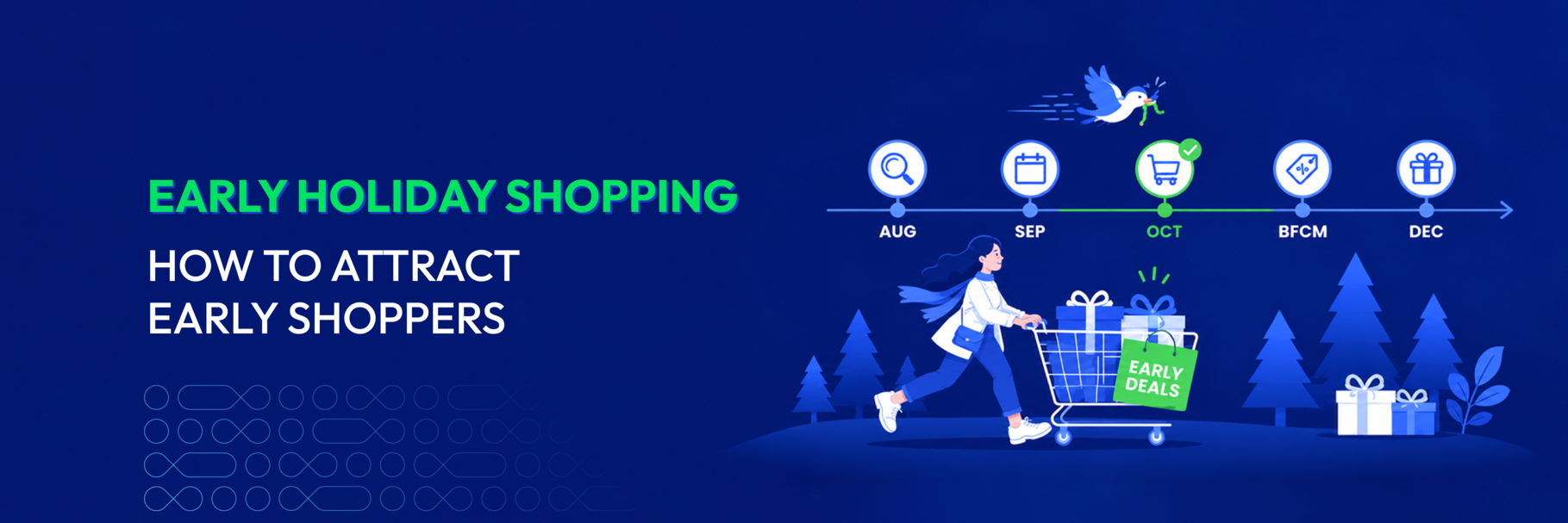
Holiday shopping no longer starts with Black Friday. Many consumers begin searching for gifts, comparing prices, and making purchases weeks before the traditional holiday rush.
For retailers, this creates an opportunity to reach early bird shoppers before competition peaks around Black Friday and Cyber Monday (BFCM). Instead of simply offering discounts earlier, businesses need to appear at the right time, provide real value, and make the journey from discovery to checkout easier, turning that early attention into early sales.
Key Takeaways
- Some consumers start holiday shopping as early as September.
- Price, product availability, convenience, and delivery are key concerns for early shoppers.
- Retailers should build awareness before major BFCM promotions begin.
- Gift guides, early offers, personalization, and email marketing can help convert early demand
- AI is increasingly influencing how consumers discover and compare products.
Understand why early birds choose to shop early
Early birds are people who shop early in or before the holiday season. In the time before the holiday season starts, they actively research different products and retailers.
Unlike deal-focused BFCM shoppers, they have more time to compare retailers, secure popular products, spread out spending, and avoid last-minute delivery pressure.
In fact, 77% of surveyed consumers expected higher prices on holiday goods, according to Deloitte’s 2025 Holiday Retail Survey. This price anxiety gives shoppers another reason to research and lock in purchases earlier.
And “early” can be earlier than many retailers expect. According to Shopify (2025), 26% of surveyed consumers start holiday shopping by the end of September.
A typical journey might look like this:
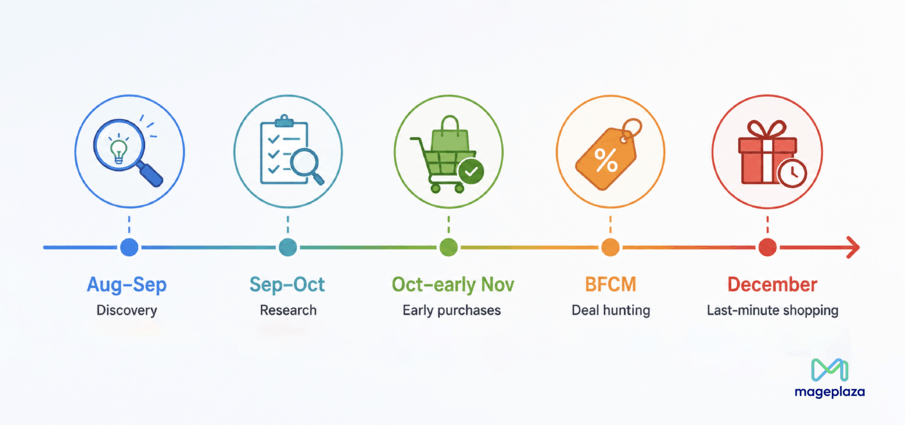
This doesn’t mean offering your biggest discount in September. It means being discoverable before shoppers enter buying mode and giving them the right reason to purchase at each stage.
A timeline-based strategy to win early bird shoppers
Rather than treating every tactic the same, sequence them across two phases: a quiet warm-up that builds visibility and readiness, followed by a launch phase that converts warmed-up demand into early purchases — all before the BFCM rush begins.
Q3 (July–September): Build your warm-up foundation
Q3 is less about aggressive promotions and more about becoming discoverable and technically ready before holiday demand increases.
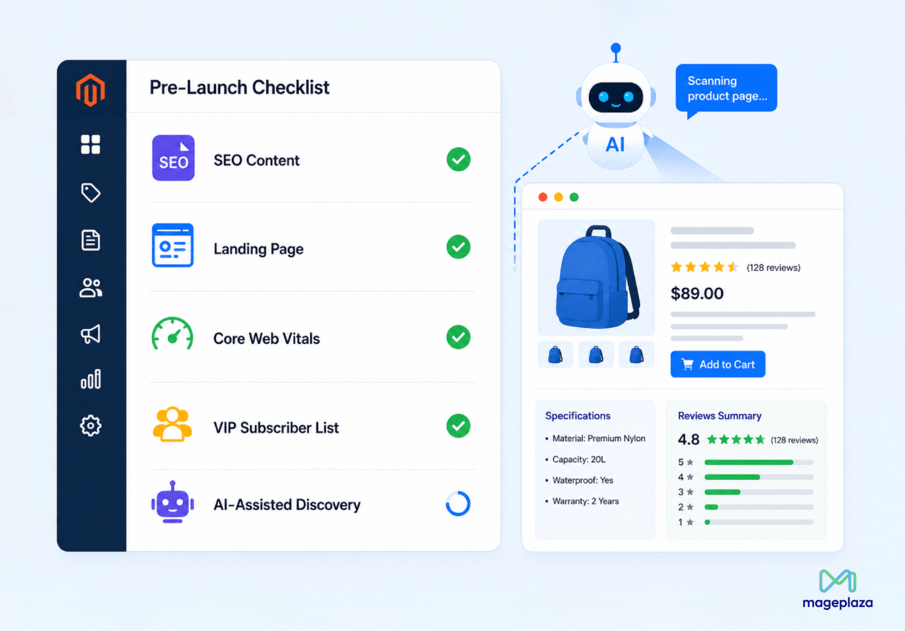
Strengthen seasonal SEO and content
Start refreshing holiday landing pages, category pages, gift-related keywords, and seasonal content before search demand peaks. On an established domain, new pages are usually indexed within days, but earning enough ranking signal to show up for competitive gift keywords typically takes 4–8 weeks. That’s why gift guides such as Gifts Under $50, Gifts for Parents, or Best Holiday Gifts need to go live in July–August, not October. Publishing in Q3 gives Google time to trust and rank the pages before search demand peaks in November.
Broader holiday marketing strategies can also help coordinate SEO, content, social media, and promotional planning before the season begins.
Support AI-assisted product discovery
AI is becoming another route through which shoppers discover and compare products.
Shopify found that 64% of surveyed consumers planned to use AI to find deals and discover products during the 2025 holiday season. Salesforce later reported that AI and agents influenced $262 billion in global online holiday spending (Salesforce, 2025).
Keep product descriptions, specifications, prices, availability, variants, reviews, shipping information, and FAQs clear and accurate. Structured information makes products easier for shoppers, search engines, and AI systems to understand.
Build your VIP and subscriber audience
Use email signup incentives, wishlists, loyalty programs, and VIP lists to identify shoppers you can reach first when early offers launch.
For Magento stores, Magento 2 Reward Points can add another reason for existing customers to return during the holiday season without relying entirely on discounts.
Prepare your Magento 2 store for traffic
Mobile drives 74% of retail site traffic (Statista), and a bad mobile experience sends 40% of users to a competitor (OuterBox). Review mobile speed, Core Web Vitals, search, navigation, checkout, and inventory visibility now, while traffic is still light. Waiting until BFCM to fix issues means losing sales when it matters most.
Early bird orders are frequently gifts, not personal purchases, so it’s worth walking through your gift-sending flow as a shopper would:
- Gift message field at checkout
- Gift receipt / packing slip with prices hidden
- Gift wrap option
- Check that order confirmation emails don’t leak prices when sent to the recipient
October–Pre-BFCM : Launch your early bird campaign

By October, move from preparation to activation. Shoppers are comparing options and becoming more willing to purchase, but you still don’t need to use your strongest BFCM discounts.
Give loyal customers early access
Offer subscribers, loyalty members, or VIP customers exclusive access to selected products, bundles, or promotions before the general public.
This creates urgency while rewarding existing customers without immediately cutting prices across the entire store.
Use smarter incentives instead of deeper discounts
Which incentive to use depends on your margin and goal:
- Low margin: Lean on free shipping or tiered pricing — they add value without cutting your unit price.
- Want to raise average order value: Bundles and tiered pricing reward customers for buying more, rather than discounting what they were already going to buy.
- Want repeat customers, not just a one-time discount: Reward points spread the cost over future orders instead of hitting margin now.
- Shoppers unsure what to buy: Gift vouchers convert undecided browsers without you needing to guess the right product.
- Have surplus or slow-moving stock: Gifts with purchase add perceived value while clearing inventory that would otherwise sit unsold.
For shoppers who aren’t sure what to buy, holiday gift vouchers can provide a flexible alternative.
Quantity-based pricing can also encourage larger orders without applying the same discount to every shopper. If this fits your campaign, see how to set up Tier Price in Magento 2 for different quantities and pricing conditions.
Launch pre-orders for high-demand products
Pre-orders can help capture demand for upcoming or temporarily unavailable holiday products before customers move to competitors. They also give merchants an earlier signal of demand before committing inventory to peak season.
If pre-orders are part of your plan, this eCommerce preorder guide covers how campaigns work and how to communicate with customers.
Clearly state expected delivery dates, and have a cancellation/refund policy ready in case a supplier delay pushes fulfillment past your promise — in the US, this is a legal requirement under the FTC’s Mail Order Rule (ship within 30 days, or get the customer’s consent to extend).
Make gifting easier, not just discovery
Shoppers often know their budget or who they’re buying for, but not the exact item. Shorten discovery using seasonal categories, gift guides, smart search, and Layered Navigation for Magento 2 filters.
Personalize recommendations using browsing behavior, purchase history, and seasonal intent to surface relevant products rather than more products.
Finally, make execution seamless right on the product page. Clearly highlight gifting options upfront—like custom gift messages, price-hidden gift receipts, gift wrapping, and shipping directly to a different address.
Once BFCM itself arrives, the focus shifts to conversion, urgency, and fulfillment: a different playbook than the early bird strategy covered here. For deal pacing, urgency tactics, and post-sale retention, see amazing marketing ideas for BFCM.
How to measure your early holiday campaign
Early selling has one real risk: if early offers sit too close to your Black Friday pricing, you move sales forward instead of adding them. Measuring stage by stage tells you whether early buyers came back during BFCM and whether the season grew overall, which is what decides whether early-stage discounting is worth repeating next year.
Don’t wait until the end of December to evaluate performance. Different metrics matter at different points in the season:
| Metric | Period | What it tells you |
|---|---|---|
| Net list growth / week | Q3 warm-up | Whether your VIP/subscriber base is actually growing before you need it |
| Revenue per visitor | Q3–October | Whether early content and campaigns are converting traffic, not just attracting it |
| Conversion rate | All stages | How efficiently traffic turns into orders at each stage |
| Cart abandonment rate | Q3–October | Where friction is stopping early shoppers before checkout |
| Average order value (AOV) | October | Whether bundles and tiered pricing are lifting order size |
| Gross margin after incentive | October | Whether early incentives (free shipping, points, vouchers) are eating into margin |
| Cross-stage repeat rate | October → BFCM | Whether early buyers return during BFCM, or early selling simply pulled BFCM sales forward |
| Return on ad spend (ROAS) | All stages | Ad efficiency at each stage, so budget can shift to whichever one performs |
| Returning customer rate | BFCM–December | Whether the relationships built early convert into repeat purchases later |
| Total revenue growth YoY | End of season | Whether the season grew overall, or shopping simply shifted earlier |
| Net revenue after returns | December–post-season | True revenue once holiday returns are accounted for |
Most importantly, compare performance across early holiday shopping → BFCM → December to determine whether your campaigns are generating additional revenue or simply shifting purchases earlier.
Set up tracking before you launch
To actually split revenue and behavior by stage later, get this in place before Q3 campaigns go live:
- Standardize UTMs with a phase parameter, for example
utm_campaign=s1-earlybirdfor Q3–October traffic vs. a separate tag for BFCM traffic - Use a distinct coupon code per phase: the cheapest way to split Stage 1 vs. Stage 2 revenue without extra analytics tooling
- Create a separate Magento customer group for VIP/early-access shoppers, plus a holdout group who didn’t get early access, so you can compare the two
- Snapshot all of this into one fixed file at the end of month 1, before that year’s Black Friday, so you have a clean baseline to benchmark against next season
Why this comparison matters
Tracking the three stages separately, rather than one blended total, helps you:
- Plan inventory better, knowing which products move early vs. during the BFCM spike
- Spend ad budget more effectively, on whichever stage actually drives incremental revenue
- Match promotions to each stage, saving deeper discounts for BFCM and lighter incentives for early shoppers
- Benchmark next season more accurately, with real stage-by-stage data instead of one lump number
Early holiday shopping checklist
Before launching your early holiday campaigns, make sure your Magento 2 store is ready:
- Published holiday landing pages and gift guides
- Tested site speed, mobile performance, and checkout
- Reviewed inventory and reserved stock for BFCM
- Configured pre-orders for high-demand products where needed
- Tested search, filters, and product recommendations
- Prepared VIP early access and early-bird promotion rules
- Set up holiday and abandoned-cart emails
- Confirmed shipping deadlines and delivery information
- Updated holiday return and exchange policies
- Verified analytics and campaign tracking
A quick pre-season check can help uncover performance, security, SEO, and UX issues before they affect holiday sales.
Magento Site Audit Checklist Free Download
Comprehensive audit checklists: Code audit, Security and Performance audit, UI-UX Audit
Free management worksheet: Content management, Link building, Keyword research,...
FAQs
When should I start my early bird holiday campaign?
SEO content and technical prep by July–August (ranking takes 4–8 weeks), then VIP early access and active promotions in October — before your strongest BFCM offers launch.
Will early bird promotions cannibalize my Black Friday sales?
They can, if early offers price too close to BFCM. Track cross-stage repeat rate and YoY revenue growth to see if the season grew overall or just shifted earlier.
What if a customer buys early and the price drops on Black Friday?
Decide upfront: either offer a one-time price match within a set window (e.g., 7–14 days), or treat early bird and BFCM pricing as separate promotions. State the policy clearly at checkout.
How do I offer early bird discounts without hurting my BFCM margins?
Use lighter incentives before BFCM, such as free shipping, reward points, bundles, gifts with purchase, or VIP access. Save your deepest discounts for peak BFCM periods and track both margin and conversion to ensure early offers remain profitable.
How can I set up early bird pre-orders in Magento 2?
Choose eligible products, set expected availability dates, and clearly show the pre-order status and delivery expectations to customers. Follow Pre Order documentation for Magento 2 configuration steps.
How do I prevent early bird promotions from causing stockouts before BFCM? x
Set inventory limits for early promotions and reserve stock for high-demand BFCM products. Monitor sell-through rates during the early bird period and adjust promotions or pre-order quantities before inventory runs too low.
How should I handle holiday returns and exchanges?
Clearly communicate return deadlines, eligibility, and refund or exchange options before purchase. Consider extending the return window for holiday gifts and use a structured RMA process to handle higher post-holiday return volumes.
Final Thoughts
Holiday shopping is no longer concentrated around a few peak days. Many customers start researching, comparing, and purchasing weeks before Black Friday. Start early, make products easier to discover, provide meaningful value, and remove friction throughout the shopping journey. Most importantly, use your own data to understand when your customers actually start shopping. That insight can help you improve campaigns, inventory planning, and promotions for every holiday season.
Table of content

Summer is the CMO and Digital Commerce Solution Expert with 10+ years of experience. She specializes in Magento, Shopify, ERP, CRM, AI, and Blockchain, delivering strategic solutions that transform businesses. With a deep understanding of digital commerce, she helps brands scale and stay ahead in a competitive market.
Related Post
16 mins read
|
08-30-2026
5 mins read
|
07-30-2026
7 mins read
|
06-30-2026

How to Enable DebugView in GA4 for your Magento 2 store - Mageplaza
Step-by-step guide to enabling GA4 DebugView for Magento 2 merchants — verify your GA4 events are firing correctly before trusting your data.
8 mins read
|
06-09-2026
Table Rate Shipping in eCommerce: A Practical Guide
Master Magento 2 Table Rate Shipping. Learn how to configure an accurate, automated shipping matrix to optimize your checkout and boost sales.
10 mins read
|
06-02-2026
14 mins read
|
09-30-2026
16 mins read
|
08-30-2026
5 mins read
|
07-30-2026
7 mins read
|
06-30-2026
How to Enable DebugView in GA4 for your Magento 2 store - Mageplaza
Step-by-step guide to enabling GA4 DebugView for Magento 2 merchants — verify your GA4 events are firing correctly before trusting your data.
8 mins read
|
06-09-2026
Table Rate Shipping in eCommerce: A Practical Guide
Master Magento 2 Table Rate Shipping. Learn how to configure an accurate, automated shipping matrix to optimize your checkout and boost sales.
10 mins read
|
06-02-2026