



8 mins read
|
09-30-2026
8 Benefits of Affiliate Marketing for Brands
Summer Nguyen
|
09-03-2026


Is affiliate marketing worth it for your eCommerce store? It’s not mandatory, but for many brands it’s become one of the more reliable ways to grow, without the upfront cost or risk of traditional marketing channels.
Done right, an affiliate program can drive more sales, expand your reach into new audiences, and add a low-risk revenue stream that runs alongside your existing marketing efforts.
Below are the benefits affiliate marketing offers, along with how to build a strong affiliate network for your store.
How Affiliate Marketing Works
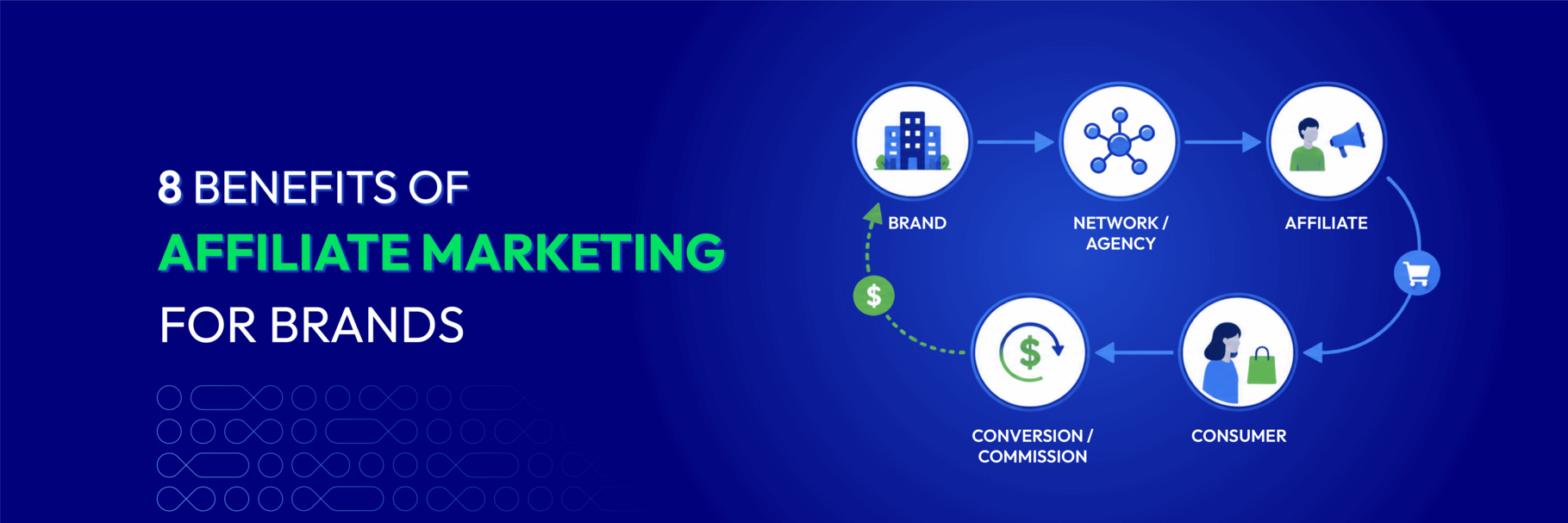
In affiliate marketing, affiliates or independent marketers promote a brand’s products or services in exchange for commissions.
(Looking to become an affiliate yourself, rather than run a program? Check out Top Affiliate Marketing Programs for Beginners.)
They earn a share of the profit from each visitor, sale, or lead they generate. From the brand’s perspective, the number of affiliates who can join a program is unlimited.
The Modern Model of an Affiliate Program for eCommerce
The traditional model of an affiliate program has four parties:
- Affiliates or Advertisers: Use their own channels to encourage potential buyers to take action (click a link, fill out a form, make a purchase). In exchange, they receive a commission for each sale
- Consumers: The determining factor for the success of any affiliate program. Each successful conversion contributes to the affiliate’s final commission
- Product creators or merchants: Create and provide the products or services
- Network: The bridge connecting brands and affiliates, usually an online platform where both sides find suitable partners
As eCommerce needs evolved alongside technology, a fifth component emerged: agencies.
Agencies oversee the entire affiliate program lifecycle, including:
- Finding the right affiliate partners for the brand
- Negotiating commission terms on the merchant’s behalf
- Measuring affiliate program performance
Networks are the platforms where brands and affiliates meet. Agencies are the experts who help brands run their programs successfully.
Top Advantages of Running an Affiliate Program
1. A new stream of profit
A strong affiliate program is built on long-lasting relationships between two essential parties: the brand and its affiliates.
Implemented well, affiliate marketing becomes one of the most profitable sales channels for both revenue and brand awareness, for three reasons:
- You gain leads, traffic, and sales by partnering with influencers or experts who match your core audience
- Unlike an in-house sales team, affiliate marketing runs as a passive sales funnel that works 24/7
- Affiliates and your sales team complement each other: affiliates generate interest among cold traffic and leads, while your sales team nurtures and converts them into customers
Importantly, this new stream doesn’t replace your in-house sales team or existing promotions, it runs in parallel with them. You gain an extra sales force made up of affiliates who only get paid when they deliver a result, bringing in customers you’d otherwise have to acquire yourself.
2. Cost-effective
Affiliate marketing is one of the most cost-effective marketing tactics available today, built on a win-win relationship between brand and affiliate, from setup through ongoing costs.
Setup requires little to no upfront investment. MarketSplash reports that around 65% of affiliate marketing runs through blogging, a free but effective channel. Bloggers, influencers, reviewers, and comparison sites manage their own platforms and content, so you’re not responsible for creating ads or running campaigns.
Ongoing costs stay low too, for three reasons:
- Affiliates handle most of the marketing activity themselves, so they bear a chunk of the associated costs
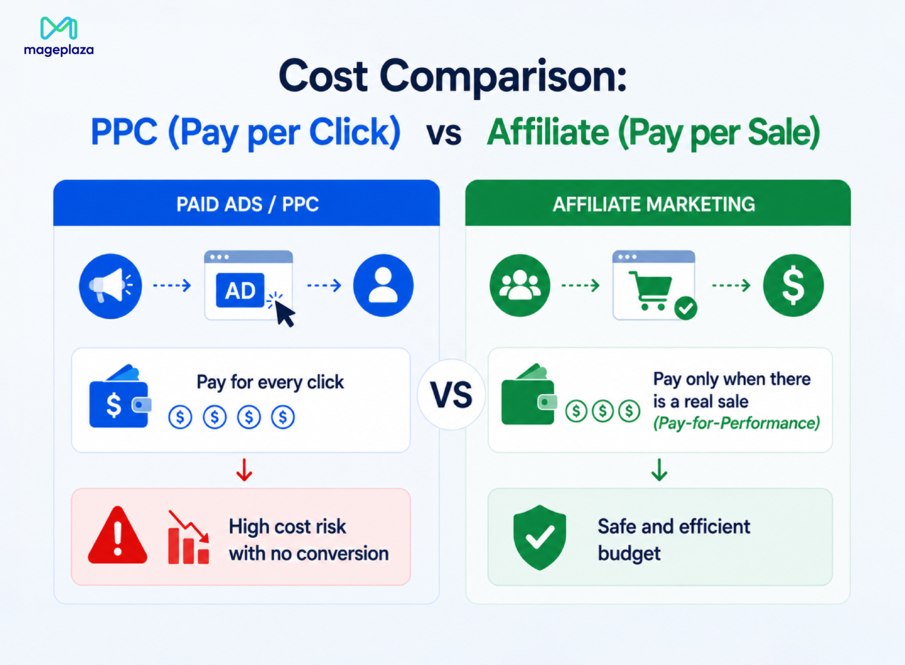
- The model is commission-based: you only pay affiliates from the sales they generate
- Compared to paid advertising, where you pay for every click regardless of outcome, this tactic is far more budget-friendly
Even with PPC affiliates, costs remain manageable relative to returns, since affiliates can reuse and adapt their own promotional assets across campaigns instead of requiring new creative from you each time.
Low cost also means low risk: you only pay a commission when there’s an actual conversion, which is why affiliate marketing suits businesses on a tight budget.
3. Increase competitive advantage
Affiliate marketing has become a popular tool for marketers worldwide, which also makes competition between affiliates more intense than ever.
Even so, affiliates give your business an edge. Whether or not a specific promotion converts, an affiliate’s marketing effort still boosts your brand awareness. For example, when two stores run a similar seasonal sale, the one with an active affiliate network keeps generating organic mentions, reviews, and referral traffic through its affiliates well after the paid ads stop running, while the competitor’s visibility drops the moment the ad budget runs out.
4. A new approach to audiences through influencers
Affiliate marketing also opens the door to entirely new audiences. By offering appealing deals to influencers in your niche, you can quickly reach new customers and boost brand awareness.
Affiliates get paid to promote your products, so you expand your audience with minimal effort on your end, while also gaining credibility through the trust their followers already place in them.
💡 Tip: A dedicated landing page per influencer or affiliate makes it easier to track
5. Learn from affiliates
Every affiliate has their own methods and strategies for promoting a brand. Top performers bring back marketing ideas you can apply to your own workflows.
What you can learn from the best publishers in your network:
- Their audience data
- Their communication style with the audience
- How they connect audience needs to your products or services
- Which channels reach your target audience most effectively
These insights help sharpen the effectiveness of your own marketing.
6. Easy to track and manage affiliate performance
The more data you extract from your affiliate program, the more you can optimize it. Affiliate analytics come down to two components: KPI tracking and performance analysis.
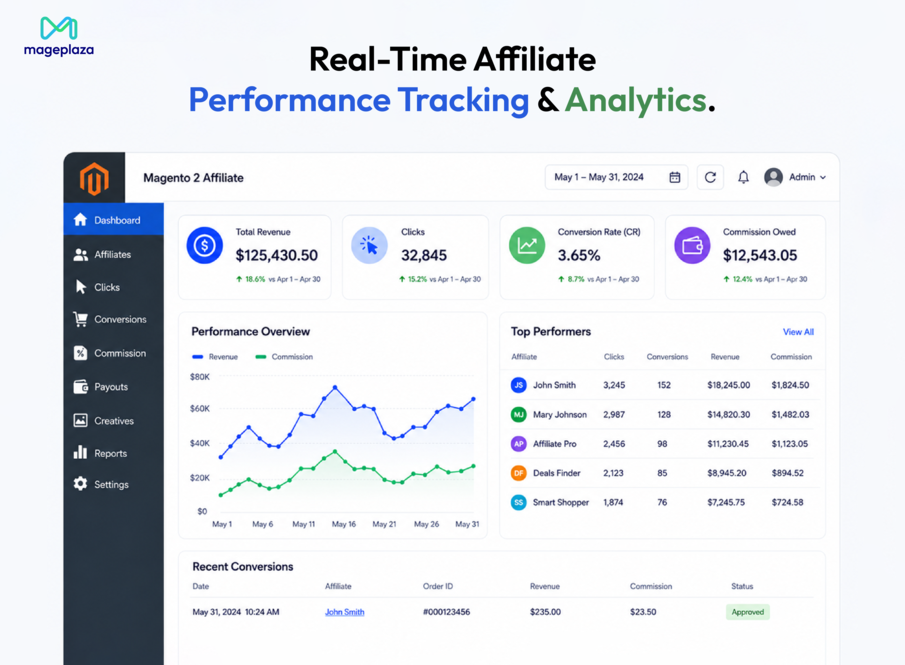
Key metrics worth tracking:
- Revenue / Return on Investment (ROI)
- Orders and AOV (average order value)
- Clicks / Impressions / Leads
- Percentage of earned commissions per affiliate
- Conversion rates
- Cost Per Acquisition (CPA) for customers and affiliates
- Onboarding time for customers and affiliates
- Customer lifetime value (LTV)
Trackable affiliate links make it easy to monitor and analyze affiliate activity and results in real time, especially when paired with a tag management tool like Google Tag Manager for accurate cross-channel attribution.
7. High ROI, pay-for-performance
TRUELIST reports that the affiliate sector accounts for 16% of online orders, generating sales at minimal marketing cost. Payment is tied to performance: you compensate affiliates for outcomes, not time or effort. Most models are conversion-based: affiliates promote your offering and earn a fee for each customer they convert. You only pay for what you actually earn.
Setting up a program also lets you put safeguards in place for your brand image, reputation, and copyrights, and vet networks or partners for compatibility before committing.
💡 Tip: Make sure commissions are reversible. If a referred order gets refunded or canceled, the affiliate’s commission should be deducted automatically, not left sitting on the books as a payout you still owe.
8. Flexibility
Affiliate marketing is also highly flexible. Once your program is live, adjusting the scale of your effort is simple: add more affiliates, or focus on a smaller group, without overspending your budget.
You can also adjust commission and incentive structures anytime to keep payouts competitive and sustainable, or give affiliates discount codes to share with their followers to boost both your sales and their earnings.
💡 Tip: Use time-limited commission boosts during major sales events (Black Friday, back-to-school) to spike affiliate promotion right when it matters most, then let rates revert automatically once the event ends.
Choosing the Right Affiliate Tool for Your Store
Once you’ve decided affiliate marketing is worth pursuing, make sure whatever tool you pick can handle four things:
-
Multiple programs with different commission tiers: By product, category, or customer group
-
Automated payouts through methods affiliates actually use: PayPal, bank transfer, offline
-
Assets affiliates can drop onto their own pages: Tracked links and banners, not just a raw URL
-
Per-affiliate reporting on clicks, orders, and commission owed
From there, the right setup depends on your store’s size and technical resources:
-
Just getting started? A lightweight, native extension lets you launch a program without extra software subscriptions or coding work. On Magento 2, for example, Mageplaza Affiliate covers this out of the box.
-
Comparing options? If you’re evaluating Magento extensions specifically, see how the two most popular ones stack up in Amasty Affiliate vs. Mageplaza Affiliate before you commit.
-
Managing at scale? Once your affiliate network grows past a handful of partners, dedicated tracking and payout software becomes worth the investment. Our guide to the 5 Best Affiliate Management Software Solutions breaks down the top picks across platforms.
-
Prefer not to manage it in-house? Joining an established external affiliate network (e.g., ShareASale, CJ Affiliate, Awin) or working with an affiliate marketing agency hands off recruiting, tracking, and payouts to the network in exchange for a fee. It’s a good fit if you’d rather not build and maintain the infrastructure yourself.
How to Build a Robust Affiliate Network?
Building a strong affiliate network starts with recruiting the right partners, setting clear incentives, and picking products they can promote effectively. The key elements to get right:
- Actively recruit affiliates instead of waiting for them to find you, and encourage existing affiliates to bring in sub-affiliates
- Set a transparent, easy-to-follow commission and bonus policy
- Promote your program across your own social channels, your site, and your existing affiliate base
- Choose products with strong margins, niche fit, and shareability
- Vet affiliates for quality content, audience alignment, and communication skills
- Stay in touch with regular performance reviews, and reward top performers
For the full step-by-step process, see How to Setup an Affiliate Program. To avoid common pitfalls along the way.
FAQs
Does Magento 2 have a built-in affiliate program?
No. Magento 2 doesn’t include native affiliate functionality out of the box. Adobe Commerce does include Reward Points and Invitations, but those are refer-a-friend tools, not a true affiliate program. Either way, you’ll need a dedicated extension, like Mageplaza Affiliate, or a third-party platform to set up tracking links, commission rules, and payouts.
How long should the attribution window be?
The attribution window (or cookie window) is how long after an affiliate’s click you’ll still credit them for a sale. Most Magento merchants use 30 days; high-AOV and B2B categories often need longer, since those purchases take more time to decide on. Extensions like Mageplaza Affiliate let you customize this per program or tier.
Can I run affiliate and reward points at the same time?
Yes. Affiliate programs and reward points systems can run independently. Affiliates earn commissions for referred sales, while customers earn points for their purchases. Can run in parallel, as long as you decide upfront whether a referred order also earns points; otherwise you’re paying twice for the same sale.
Do I need coding skills to set up an affiliate program?
No. With a native extension, like Mageplaza Affiliate on Magento 2, you can configure commission tiers, payout methods, and tracking links entirely from the admin panel, no development work required.
The Bottom Line!
Affiliate marketing isn’t mandatory, but done well, it boosts sales, keeps most of your profits, extends your reach, and adds a low-risk revenue stream alongside your regular sales. The benefits above make that opportunity clear for eCommerce businesses.
None of this is automatic, though. Affiliate programs come with real risks worth planning for upfront: low-quality affiliates who damage your brand image, fraudulent clicks or orders inflating your commission bill, and the ongoing work of vetting partners and reviewing performance. Most of these are manageable with clear program terms and regular oversight, which is exactly what the network-building steps above are for.
Small businesses and startups may find it hard at first to attract influential affiliates. With the right implementation, though, it’s just a matter of time before your affiliate program becomes a reliable second revenue stream for your store.
Table of content

Summer is the CMO and Digital Commerce Solution Expert with 10+ years of experience. She specializes in Magento, Shopify, ERP, CRM, AI, and Blockchain, delivering strategic solutions that transform businesses. With a deep understanding of digital commerce, she helps brands scale and stay ahead in a competitive market.
Related Post

16 mins read
|
08-30-2026
5 mins read
|
07-30-2026
7 mins read
|
06-30-2026
How to Enable DebugView in GA4 for your Magento 2 store - Mageplaza
Step-by-step guide to enabling GA4 DebugView for Magento 2 merchants — verify your GA4 events are firing correctly before trusting your data.
8 mins read
|
06-09-2026
Table Rate Shipping in eCommerce: A Practical Guide
Master Magento 2 Table Rate Shipping. Learn how to configure an accurate, automated shipping matrix to optimize your checkout and boost sales.
10 mins read
|
06-02-2026
8 mins read
|
09-30-2026
16 mins read
|
08-30-2026
5 mins read
|
07-30-2026
7 mins read
|
06-30-2026
How to Enable DebugView in GA4 for your Magento 2 store - Mageplaza
Step-by-step guide to enabling GA4 DebugView for Magento 2 merchants — verify your GA4 events are firing correctly before trusting your data.
8 mins read
|
06-09-2026
Table Rate Shipping in eCommerce: A Practical Guide
Master Magento 2 Table Rate Shipping. Learn how to configure an accurate, automated shipping matrix to optimize your checkout and boost sales.
10 mins read
|
06-02-2026