

15 mins read
|
09-30-2026
E-commerce Loyalty Programs: A Comprehensive Handbook
Summer Nguyen
|
03-17-2025

Key Takeaways
- Loyalty programs are now essential for retaining customers and boosting profits in E-commerce
- Shoppers want mobile-friendly, personalized rewards that feel engaging, not just discounts.
- Businesses can pick from points, tiers, subscriptions, referrals, or hybrid models — each has trade-offs.
- Tools like Mageplaza Reward Points for Magento 2 let merchants build scalable loyalty programs without big development costs.
- The future: AI-driven personalization, gamification, emotional rewards, omnichannel integration, and even blockchain.
Have you ever picked Starbucks over another coffee shop because their Rewards program offers free drinks or exclusive app deals just for being a loyal customer? That’s the brilliance of e-commerce loyalty programs - smart strategies that turn casual shoppers into devoted brand fans.
By rewarding repeat purchases with points, personalized discounts, or VIP perks, these programs create a sense of value and exclusivity that keeps customers hooked. However, it is difficult to start if you do not get the overall idea of what it is and how everything works.
In this blog post, you can find all details of rewards programs in e-commerce, from statistics, trends, types, as well as tips and takeaways to consider when creating a loyalty program.
What is an e-commerce loyalty program?
An e-commerce loyalty program is a structured customer retention strategy that online stores use to increase repeat purchases and strengthen long-term customer relationships. Similar to traditional in-store loyalty cards, these programs reward shoppers for their continued engagement, whether that’s making purchases, leaving reviews, referring friends, or following a brand on social media.
Well-designed rewards programs go beyond discounts, fostering long-term relationships and brand advocacy while driving sustainable e-commerce growth. For businesses, it becomes a proven tool to boost customer lifetime value (CLV), reduce churn, and build brand advocacy. For customers, it provides extra motivation to stay connected and return to the same store instead of switching to competitors. This makes loyalty schemes not just an add-on, but a core driver of sustainable online growth.
How does a loyalty program works
-
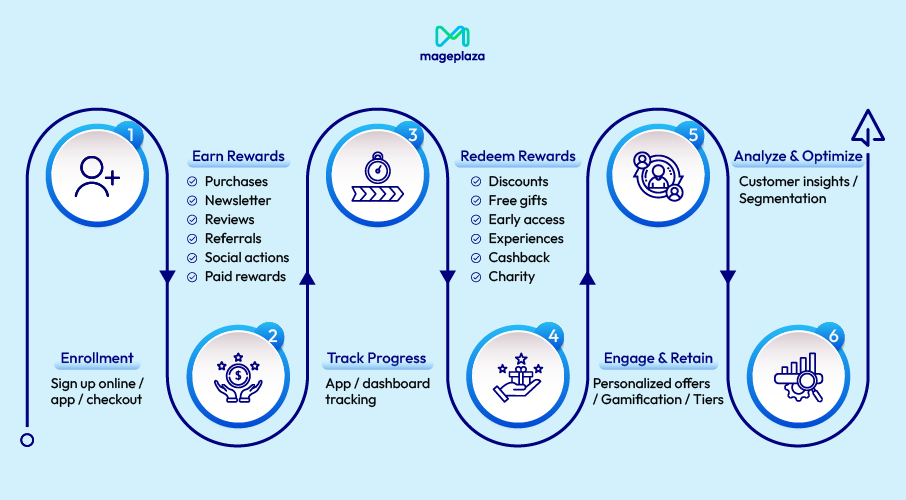
Enrollment: Customers join the loyalty program, often via a simple sign-up process on the e-commerce website, mobile app, or during checkout.
- Earn Rewards: Customers accumulate rewards (e.g., points, credits) or reach tiers by completing specific actions:
- Complete purchases
- Subscribe to newsletters
- Write product/services reviews
- Refer friends
- Interact with brands on social media (share, comment, join in games)
- In some cases, customers can pay upfront to receive certain rewards
-
Track Progress: Customers monitor their rewards through a user-friendly interface, typically via a mobile app or account dashboard.
- Redeem Rewards: Customers exchange earned rewards for benefits, such as:
- Discounts
- Free gifts
- Early access to sales or new collection
- Special experiences invitation
- Cashback
- Donate to charities
- Engage and Retain: The program encourages ongoing interaction and persuades customers to come back through:
- Personalized offers
- Gamified challenges
- Tiered benefits
- Analyze and Optimize: Businesses use program data to analyze customer behavior, segment high-value customers, and refine rewards. Tools like Mageplaza Magento 2 Reports help tailor promotions, ensuring the program remains effective and aligned with trends like personalization and omnichannel integration.
Why loyalty matters: Key Statistics in 2025
Customer loyalty isn’t just a “nice-to-have” in e-commerce, it’s one of the strongest drivers of profitability. A well-structured e-commerce rewards program helps businesses keep existing customers engaged while reducing acquisition costs for new ones. To show just how powerful loyalty can be, let’s look at the latest data and industry insights:
Customer preferences & Expectations
- A significant majority across generations prefer brands with loyalty programs: 71% of Gen X, 70% of Millennials, 63% of Baby Boomers, and 62% of Gen Z choose brands offering loyalty systems over those without (Oracle).
- 83% of survey respondents will come back to purchase from a brand if they belong to its loyalty program (Yotpo).
- 62% of Gen Z and Millennials expect digital loyalty programs with mobile-friendly features and gamified elements (Deloitte).
- 52% of consumers say personalized rewards are expected from any brand (Forbes).
Business impact & Profitability
- Companies with strong loyalty offers grow revenue approximately 2.5 times faster than their industry peers (Harvard Business Review)
- If customer retention rates increase by 5%, profits can go up by 25 - 95% (CapitalOne Research).
- According to Mageplaza, Magento 2 merchants using the Mageplaza Reward Points extension report a 37% increase in repeat order rates, highlighting the effectiveness of points-based loyalty systems.
Shopping behavior & Engagement
- 57% of rewards program members increase spending with brands they love (Accenture).
- Implementing a loyalty program on an e-commerce platform can boost average order quantity by up to 319% (Incentive Solutions).
- 86% of consumers are more likely to recommend brands with good loyalty programs to friends and family (KPMG).
In short, why is building a loyalty program for customers essential?
- Boost sales: Loyalty programs enhance customer retention and incentivize purchases, significantly increasing revenue for e-commerce businesses.
- Increase customer loyalty: Encourage new customers to stay and make existing customers feel valued, fostering long-term loyalty.
- Enhance customer experience: Show customers that the business values relationships, not just profits, improving their shopping experience.
- Support market research: Test various loyalty programs to identify appealing rewards, enabling targeted product promotions or new product development.
- Aid customer segmentation: Identify profitable versus unprofitable customers, allowing businesses to tailor programs for high-value segments.
Instead of chasing new buyers with expensive ads, investing in an e-commerce loyalty program ensures your existing customers return, spend more, and become brand advocates. You can explore 6 case studies of loyalty programs that drive results for more inspiration.
Types of E-commerce Loyalty Programs
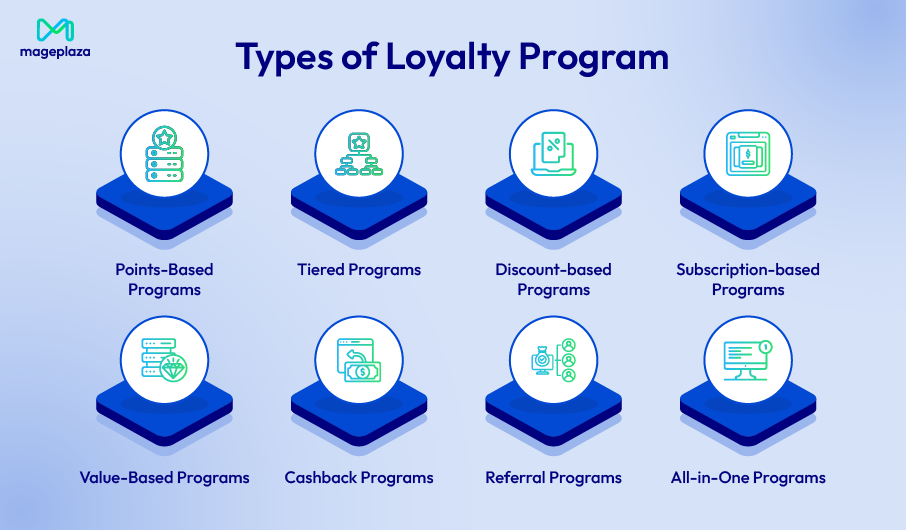
There are several types of loyalty programs in eCommerce, and each comes with unique benefits and trade-offs. From straightforward points-based systems to tiered or subscription models, these programs give merchants different ways to drive repeat purchases and build long-term relationships. Below, we’ll explore the main types of loyalty programs with examples, pros, and cons so you can choose the model that best fits your online store.
Point-Based Systems
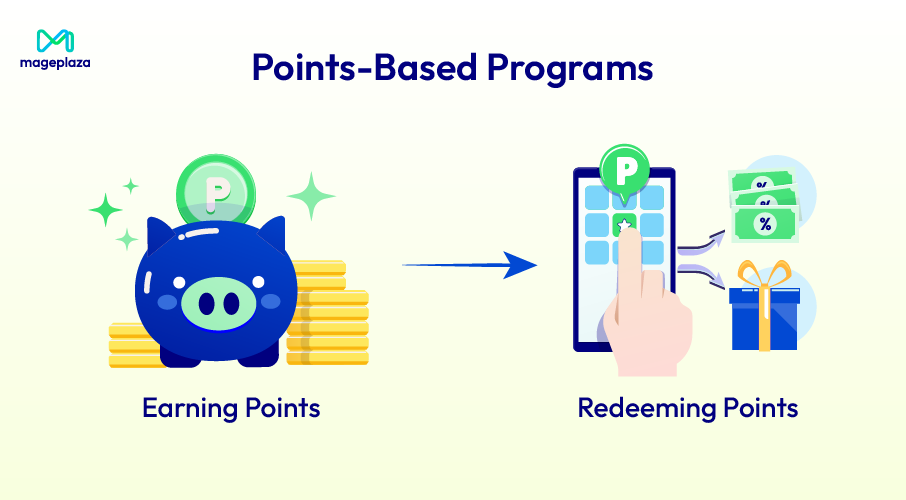
In this model, customers earn points for purchases or specific actions like signing up for an account, leaving a review, or referring a friend. These points accumulate over time and can be redeemed for discounts, free items, or other rewards. It’s the most familiar type of program and easy to integrate into almost any store.
Example: Spend $500/year to be in Silver level (5% off), $1,000/year to be in Gold level (10% off + free shipping).
Pros:
- Easy to understand and widely adopted.
- Flexible: can reward purchases, reviews, or sign-ups.
- Encourages repeat shopping.
Cons:
- Rewards may feel “small” if not valued properly.
- Requires tracking system to manage balances.
💡 Using Magento 2? According to recent surveys, over 60% of retailers use points-based loyalty programs as their primary model. Customers prefer them because they’re easy to understand and redeem, making modules like Reward Points extension one of the most trusted solutions for Magento 2 stores. Explore how you can create a points-based reward program.
Tiered Rewards
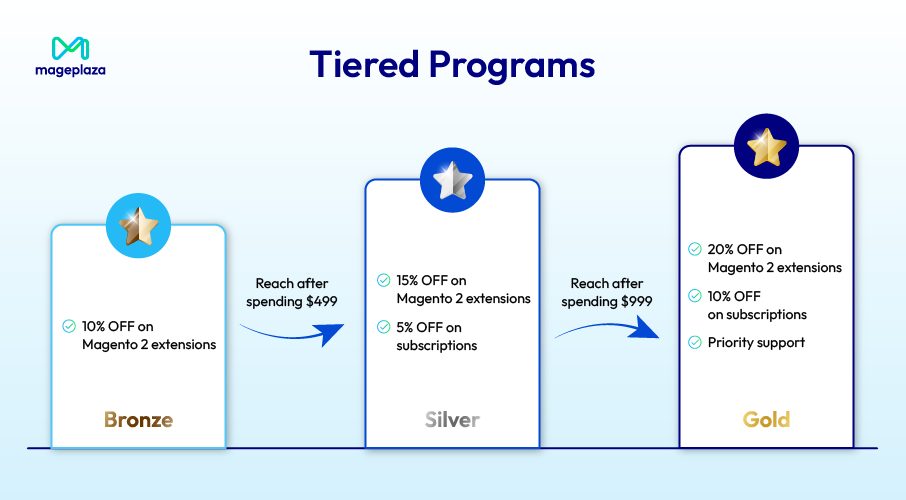
Tiered loyalty programs divide customers into levels based on their spending or engagement. As shoppers move up tiers, they unlock bigger rewards, which motivates them to spend more. This structure creates a sense of exclusivity and long-term achievement.
Example: Spend $500/year to be in Silver level (5% off), $1,000/year to be in Gold level (10% off + free shipping).
Pros:
- Motivates customers to spend more to “unlock” tiers.
- Builds loyalty over the long term.
Cons:
- Can discourage casual buyers if tiers feel unreachable.
- Requires clear communication to avoid confusion.
Discount-based Programs
Discount-based programs focus on providing immediate savings to shoppers. Customers receive a coupon or percentage off after completing a specific action, like signing up for a newsletter or making their first purchase. These programs are simple, fast, and effective for driving conversions.
Example: Get 10% off your first order after signing up for the newsletter.
Pros:
- Provides immediate gratification.
- Boosts conversions, especially for first-time buyers.
Cons:
- Trains customers to wait for discounts.
- Can reduce profit margins if overused.
Subscription-Based Memberships
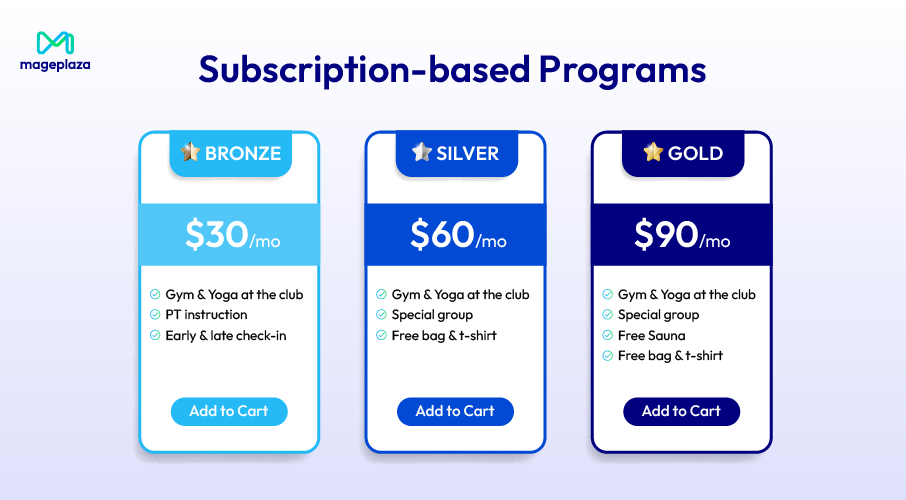
With subscription programs, customers pay a recurring fee in exchange for exclusive benefits. This might include perks like free shipping, faster delivery, or VIP-only discounts. It builds loyalty by making members feel special while generating steady revenue for the store.
Example: Pay $9.99/month forward for free shipping, 2-day delivery, and exclusive offers.
Pros:
- Creates recurring revenue streams.
- Encourages frequent purchases to “make the subscription worth it.”
Cons:
- Upfront cost may deter new customers.
- Risk of churn if benefits don’t feel valuable.
Value-Based Programs
Value-based loyalty programs reward customers by aligning with causes they care about. Instead of discounts or points, part of their spending goes to charity or social initiatives. This approach strengthens emotional connections and shows the brand’s values.
Example: For every $50 spent, the store donates $1 to charity.
Pros:
- Builds emotional connection with socially conscious shoppers.
- Differentiates your brand from price-focused competitors.
Cons:
- Less appealing to bargain-driven customers.
- Benefits are less tangible to the shopper.
Cashback Offers
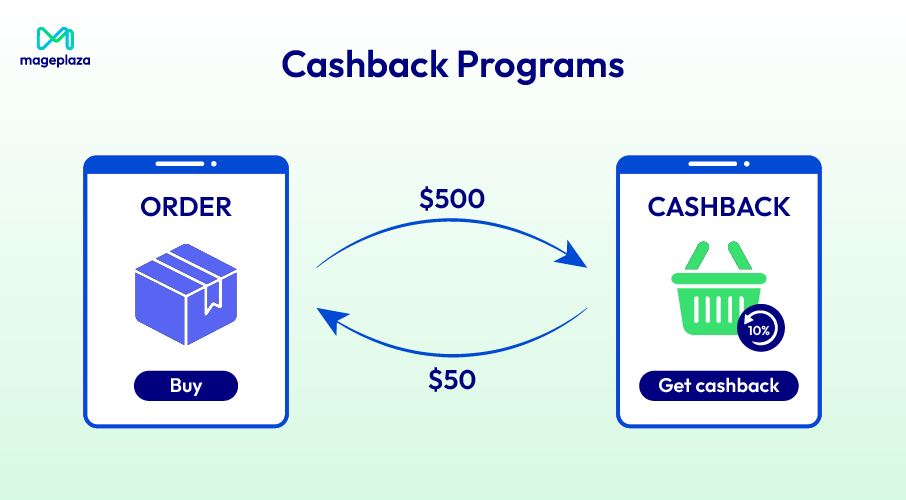
Cashback programs reward customers with a percentage of their purchase returned as cash or store credit. The value is clear and easy to understand, which makes this model very appealing. Cashback is especially effective at encouraging customers to come back for future purchases. Example: Spend $100, receive $5 store credit to use on the next purchase.
Pros:
- Strong perceived value.
- Simple and transparent.
- Incentivizes repeat purchases.
Cons:
- Can impact profit margins.
- Does not create excitement as in gamified points or tiers.
Referral Programs
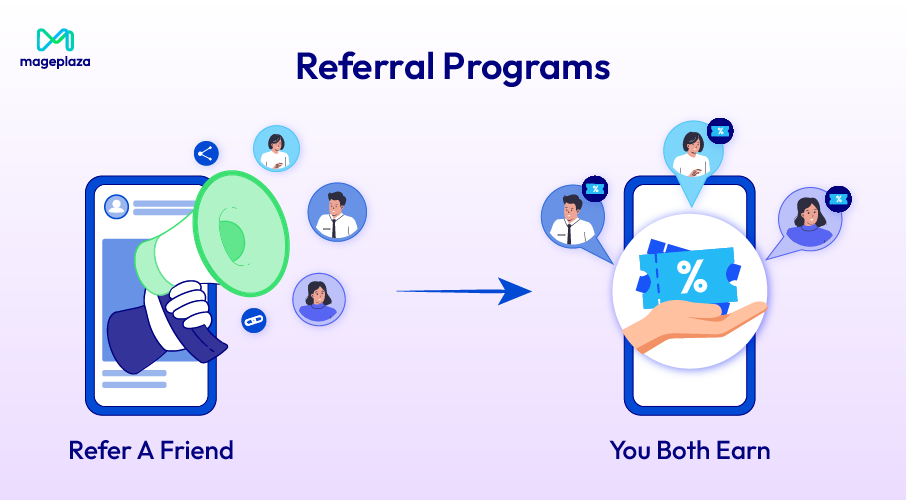
Referral programs reward customers for bringing in new buyers. When someone refers a friend who makes a purchase, both the existing customer and the new one get rewarded. This approach leverages trust and word-of-mouth marketing.
Example: Refer a friend, and both of you get a $10 voucher when the friend makes their first purchase.
Pros:
- Low-cost customer acquisition.
- Leverages word-of-mouth trust.
Cons:
- Limited once customers run out of friends to refer.
- Needs monitoring to avoid abuse.
All-in-One Programs
An all-in-one program combines multiple approaches—such as points, tiers, cashback, and referrals into one system. This gives customers multiple ways to engage, redeem rewards, and stay loyal. While powerful, it also requires strong management and technology support.
Example: Earn 1 point per $1, reach Gold tier for 10% off, plus $10 bonus for each referral.
Pros:
- Appeals to a wide range of customer types.
- Maximizes engagement opportunities.
Cons:
- Complex to manage.
- Requires strong technology to track all elements.
Create your own loyalty program vs. Use a tool
So, in which way can you create your own rewards program? Build your own or use an existing tool - all based on your business strategies and resources. Take a look at the table below and choose your path:
| Criteria | Build Your Own Loyalty Program | Use a Loyalty Program Tool |
|---|---|---|
| When to Use | When you need a highly customized loyalty model that doesn’t exist in the market. | When you want to launch quickly with proven features and best practices. |
| Ideal For | Large enterprises with strong in-house dev teams and long-term budgets. | Small to mid-sized eCommerce stores, or enterprises that prefer speed and cost efficiency. |
| Pros | - Full control over design, features, and branding. - Can create unique, innovative reward structures. |
- Fast setup and deployment - Lower upfront costs - Regular updates and support - Pre-built features like points, tiers, referrals, analytics |
| Cons | - High development and maintenance costs - Longer time to launch - Requires ongoing developer support |
- Limited customization compared to a fully custom build - Dependent on the vendor’s roadmap for new features. |
| Cost & Resources | Significant: development, QA, maintenance, server scaling. | Subscription or one-time license fees, with minimal dev effort needed. |
| Risk Factor | High: custom code may break during platform updates; requires extensive QA. | Low: stable modules built for Magento 2, tested and maintained regularly. |
| Scalability | Flexible, but requires manual upgrades and resources to scale. | Scales easily with built-in features and extension updates. |
Recommendations
- Build your own if you’re an enterprise with unique requirements, big budgets, and a dedicated dev team.
- Use a tool like Mageplaza Reward Points for Magento 2 if you want a cost-effective, scalable, and feature-rich solution to create a loyalty program without heavy dev investment.
Learn more: How to build a loyalty program for your e-commerce store
Upcoming loyalty trends in e-commerce
As e-commerce continues to evolve, customer loyalty programs in 2025 are shifting toward more personalized, engaging, and tech-driven strategies to boost customer retention and engagement. Below is a concise overview of the key trends shaping e-commerce loyalty strategies in 2025:
Hyper-Personalization with AI
Instead of offering customers what brands think they need, now AI will decide. AI is revolutionizing loyalty programs by analyzing customer data (purchases, browsing habits, preferences) to deliver hyper-personalized rewards. In Vietnam, where digital adoption is surging, AI helps brands like Shopee and Lazada offer tailored promotions, boosting engagement.
💡 Best for data-rich e-commerce platforms with large customer bases. Ideal for businesses aiming to boost CLTV and reduce churn but requires investment in AI tools and data compliance.
Gamification for engagement
Gamified loyalty programs are on the rise, incorporating game-like elements such as challenges, quizzes, and leaderboards to boost engagement. Not only does it increase customer engagement rate, but it also reminds customers of the brand and delivers new messages in a fun way. It keeps customers come back for day challenges, and encourages them to share data with the brand.
Focus on emotional and value-driven connections
When there are too many rewards programs out there, to be on top of customers’ minds, those programs should focus on emotional connections. As customers increasingly seek brands that align with their values, such as sustainability and ethical practices, loyalty programs are emphasizing emotional bonds through community-building, exclusive experiences, and rewards tied to social impact.
Seamless omnichannel experiences
After the Covid-19 period, it is undeniable that online commerce became popular; however, that is also the reason why brands want to attract shoppers back to their offline stores as well. Loyalty programs are integrating online and offline touchpoints for a unified customer journey. Starbucks Rewards, for example, allows users to earn and redeem points seamlessly via its mobile app, enhancing convenience. A good tool for enhancing customer engagement and loyalty with QR codes is the Best QR Generator - Uniqode, which allows businesses to create dynamic and trackable QR codes easily.
💡 Perfect for hybrid retailers (online + offline) like brands with mobile apps. Ideal for creating seamless customer journeys but demands robust system integration.
Mobile optimization and App integration
With mobile commerce projected to account for 59% of global e-commerce sales in 2025, loyalty programs are prioritizing mobile-friendly experiences. Apps like Starbucks’ allow users to track rewards and receive personalized offers, with 42% of consumers showing loyalty through app installations, based on a SAP Emarsys research. A seamless mobile experience is critical, as customers will abandon non-mobile-friendly sites.
Loyalty integrated with NFT/Blockchain
Blockchain and NFTs are transforming loyalty programs by offering secure, transparent reward systems and unique digital assets. While blockchain ensures transparent point tracking and secure data management, NFTs enable exclusive rewards, where users collect digital assets for unique experiences
💡 Suited for innovative brands targeting tech-savvy audiences or luxury e-commerce seeking exclusive rewards. Best for businesses with technical resources to manage blockchain integration.
Unlocking success through e-commerce loyalty programs
Creating loyalty programs is a vital approach for sustainable e-commerce growth, driving repeat purchases through diverse types like points-based, tiered, subscription, or value-driven models. Businesses can build custom programs for unique needs or use tools like Mageplaza’s Reward Points for fast, scalable solutions. As more trends such as personalization and omnichannel integration are coming in 2025, brands should consider updating suitable strategies for their rewards system, in order to stay competitive in the online marketplace.
Table of content

Summer is the CMO and Digital Commerce Solution Expert with 10+ years of experience. She specializes in Magento, Shopify, ERP, CRM, AI, and Blockchain, delivering strategic solutions that transform businesses. With a deep understanding of digital commerce, she helps brands scale and stay ahead in a competitive market.
Related Post

16 mins read
|
08-30-2026
5 mins read
|
07-30-2026
7 mins read
|
06-30-2026

How to Enable DebugView in GA4 for your Magento 2 store - Mageplaza
Step-by-step guide to enabling GA4 DebugView for Magento 2 merchants — verify your GA4 events are firing correctly before trusting your data.
8 mins read
|
06-09-2026
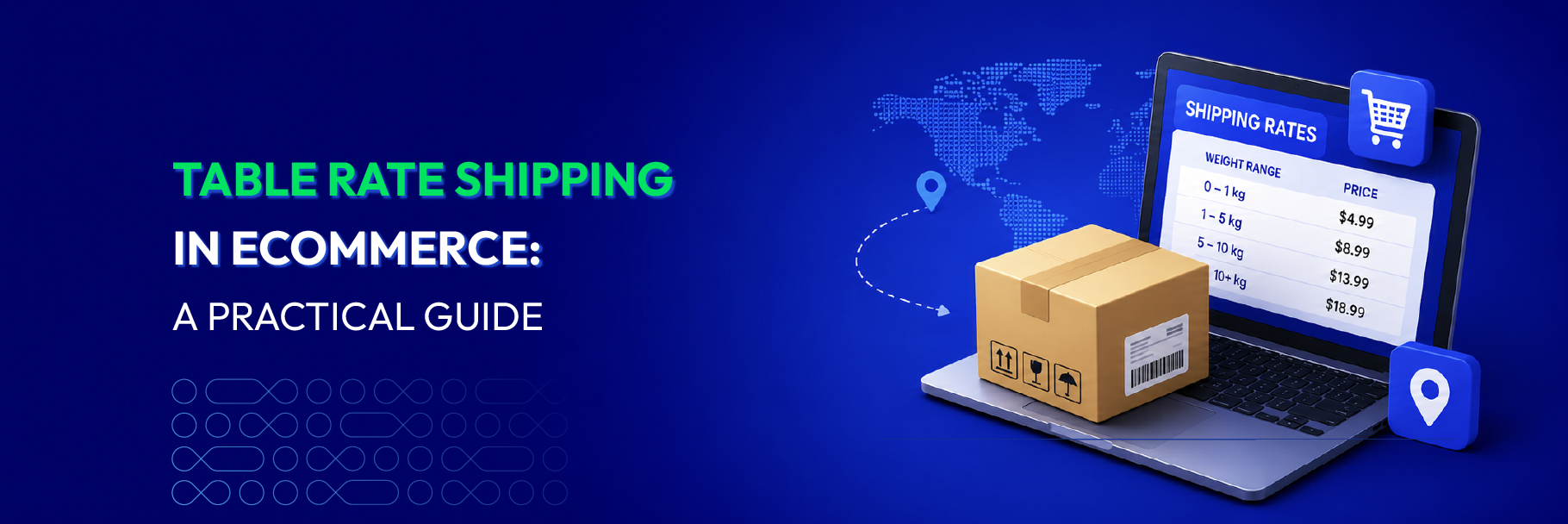
Table Rate Shipping in eCommerce: A Practical Guide
Master Magento 2 Table Rate Shipping. Learn how to configure an accurate, automated shipping matrix to optimize your checkout and boost sales.
10 mins read
|
06-02-2026
15 mins read
|
09-30-2026
16 mins read
|
08-30-2026
5 mins read
|
07-30-2026
7 mins read
|
06-30-2026
How to Enable DebugView in GA4 for your Magento 2 store - Mageplaza
Step-by-step guide to enabling GA4 DebugView for Magento 2 merchants — verify your GA4 events are firing correctly before trusting your data.
8 mins read
|
06-09-2026
Table Rate Shipping in eCommerce: A Practical Guide
Master Magento 2 Table Rate Shipping. Learn how to configure an accurate, automated shipping matrix to optimize your checkout and boost sales.
10 mins read
|
06-02-2026