

14 mins read
|
09-30-2026
How to Configure Store Locator in Magento 2
Vinh Jacker
|
07-02-2026


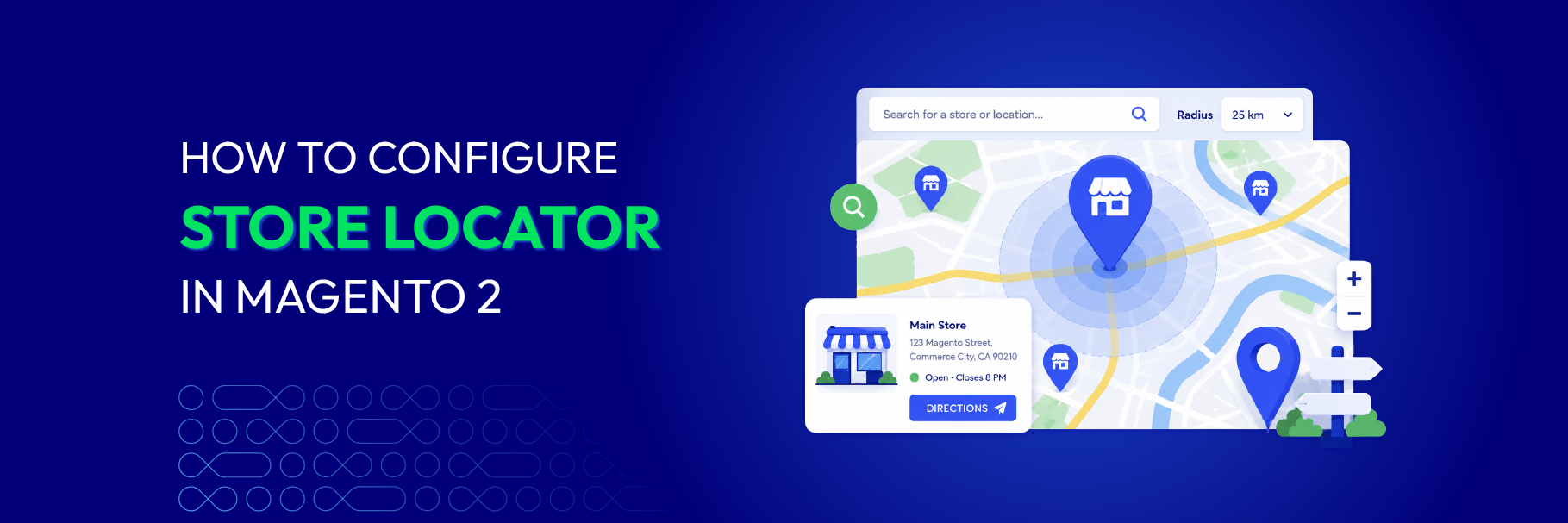
Store Locator helps customers easily find your physical stores through Google Maps. A properly configured system not only improves user experience but also drives foot traffic to your stores. Not sure if you need one yet? Check out 8 reasons why your website needs Store Locator first — otherwise, here’s how to get it set up.
Steps to configure Magento 2 Store Locator
General configuration
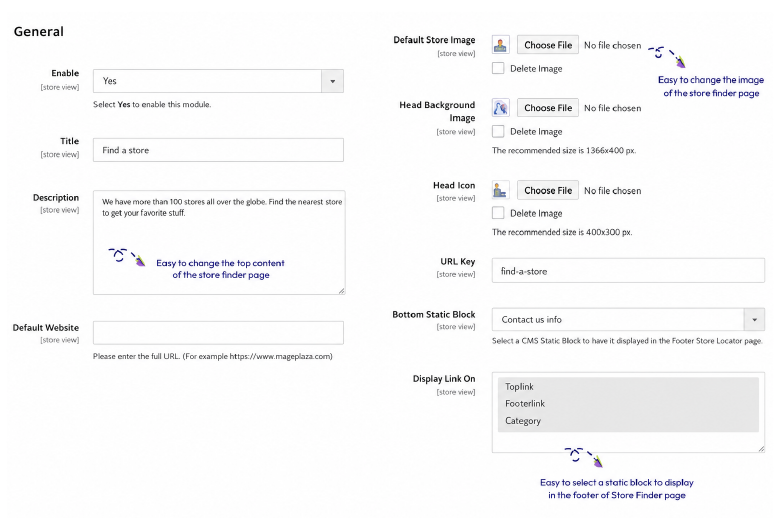
Go to: Stores > Settings > Configuration > Mageplaza > Store Locator
Activation and Page Setup:
- Enable: Select Yes to activate the module.
- Title & Description: Enter the title and description for the Store Locator page. Include local keywords to optimize SEO.
- URL key: The page URL, default is find-a-store. You can change it to something more SEO-friendly like store-locator or our-stores.
- Display link on: Choose where to display the link on the frontend (menu, footer, etc.).
- Head background image & icon: Upload a background image and icon for the header block.
- Bottom static block: Select a CMS block to display in the footer, adding content about your store network.
💡 Tip: Use the Description and Bottom static block to include location-based keywords such as city and district names – this helps improve local SEO right from the configuration stage.
Map Settings
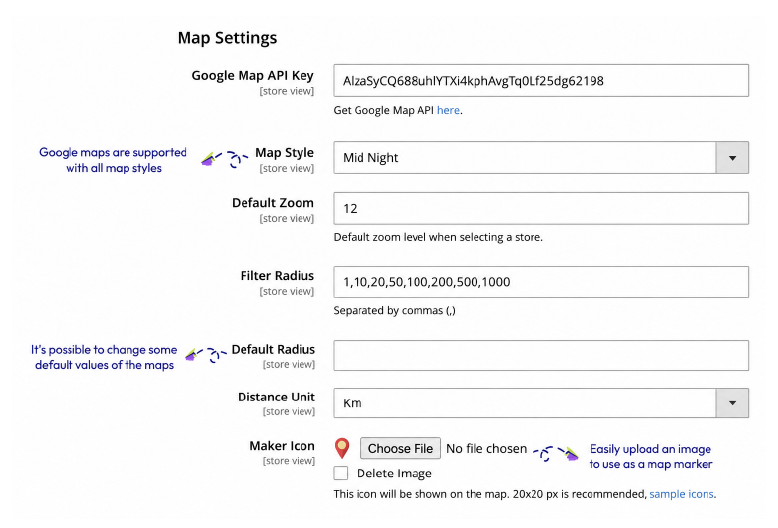
Google Map API Key: This field is required for the map to function. You need to create an API Key on Google Cloud Console and enable the following services: Maps JavaScript API, Geocoding API, and Places API.
💡 Tip: After configuration, visit the frontend to verify the map displays correctly and the API Key is working as expected.
Here’s how it looks on the frontend:
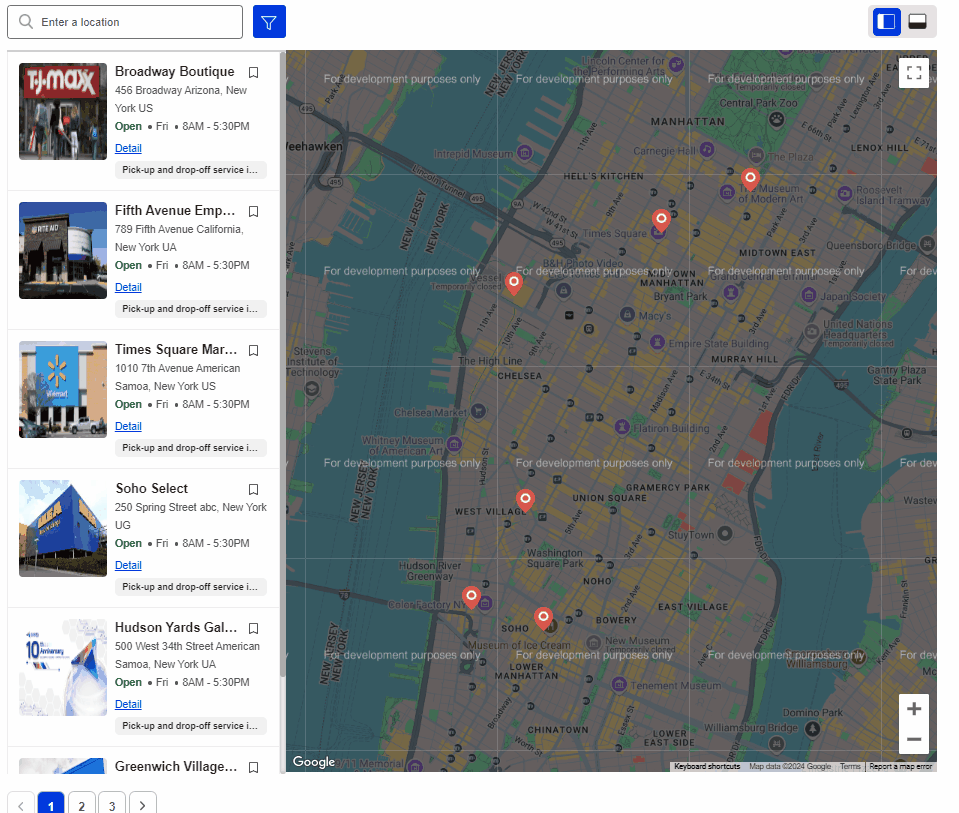
Display Customization:
- Map styles: 4 map styles to choose from.
- Default zoom: Default zoom level, recommended at 12.
- Marker icon: Upload a custom marker icon (preferably one that reflects your brand).
Search Radius Settings:
- Filter radius: Set radius options for customers to choose from (e.g., 5, 10, 25, 50km).
- Default radius: Default search radius. Set this based on your store density – if stores are concentrated in the city, 5-10km is appropriate.
- Distance unit: Choose Kilometer or Mile.
💡 Tip: Set a reasonable radius — not too wide (shows distant stores) and not too narrow (misses potential customers).
Store Time Default
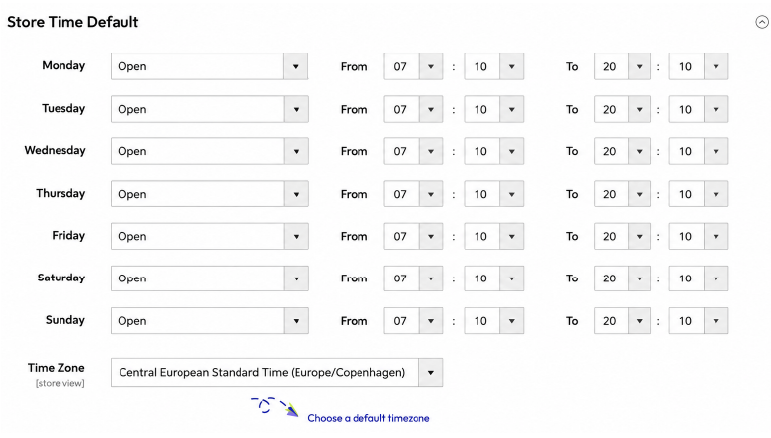
Set your default operating hours and timezone here. These values act as a template — you can override them per store when adding individual locations.
Here’s how it looks on the frontend:
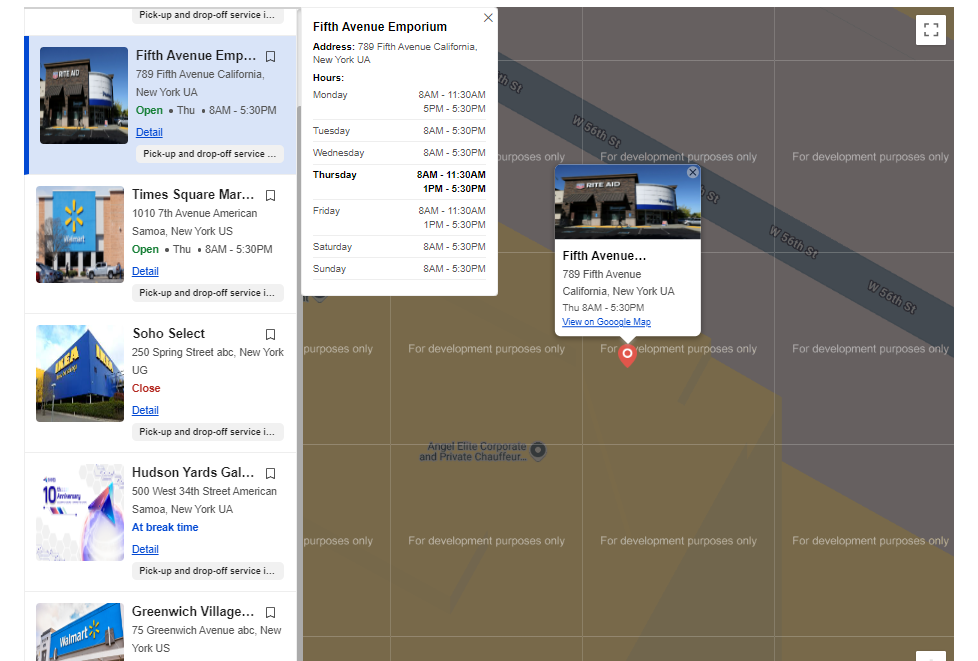
💡 Tip: Regularly update store hours and holidays for each location to keep information accurate for customers.
Manage Locations
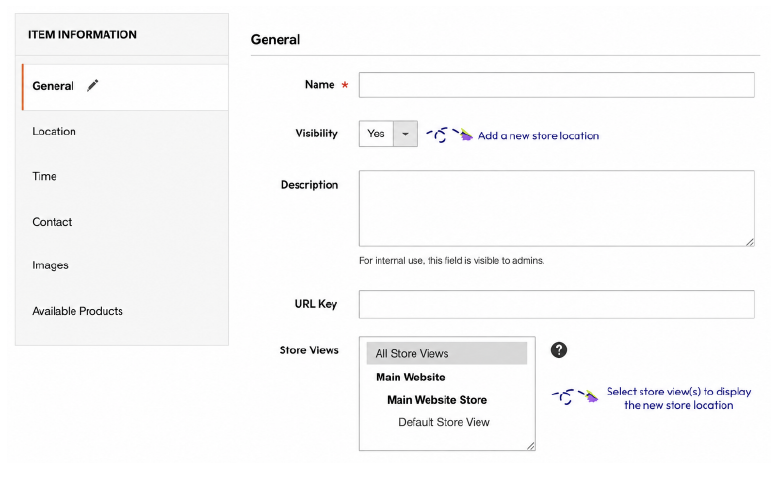
Path: Mageplaza > Store Locator > Manage Locations
Adding a New Location
Click Add New Location and fill in the following:
-
Description: don’t leave this generic. Include the full address and neighborhood keywords for local SEO.
-
URL Key: if your store name uses non-Latin characters (Vietnamese, Chinese, etc.), fill this in manually; auto-generation won’t work correctly.
-
Store View: assign the right view if you run multiple languages.
💡 Tip: If you have multiple languages, use Store View to display appropriate content for each region. You can also pair this with Store Switcher to let customers easily switch between store views on the frontend.
Managing via the Grid
The grid displays all locations with information including ID, Name, Visibility, City, Zip Code, Country, Sort Order, and Actions.
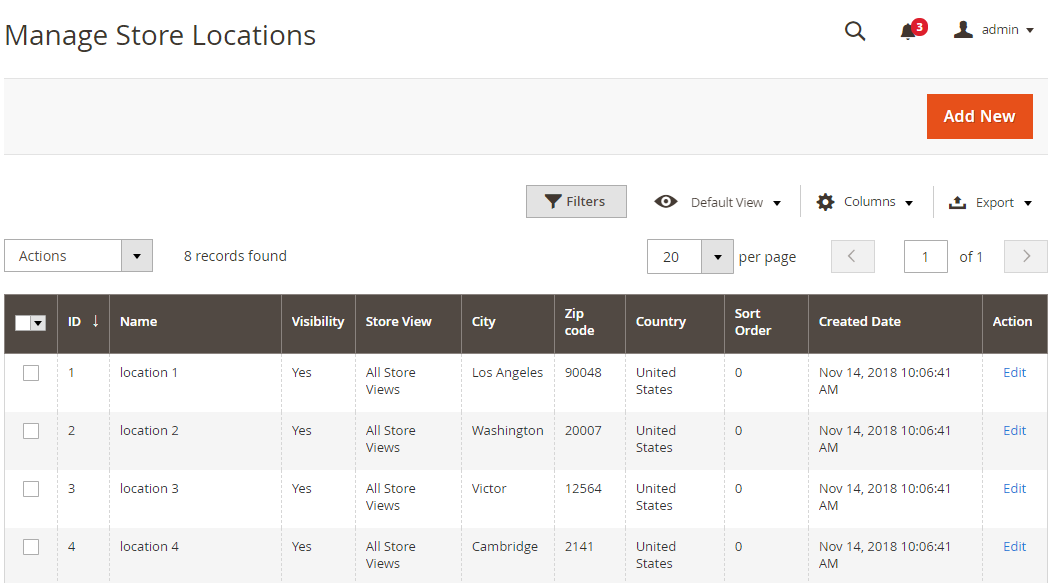
Batch actions:
- Delete: Select locations → Actions → Delete → OK.
- Change Visibility: Select locations → Actions → Change Visibility → Yes/No → OK.
You can also filter, export data, or edit inline.
Combining Store Locator with Store Pickup
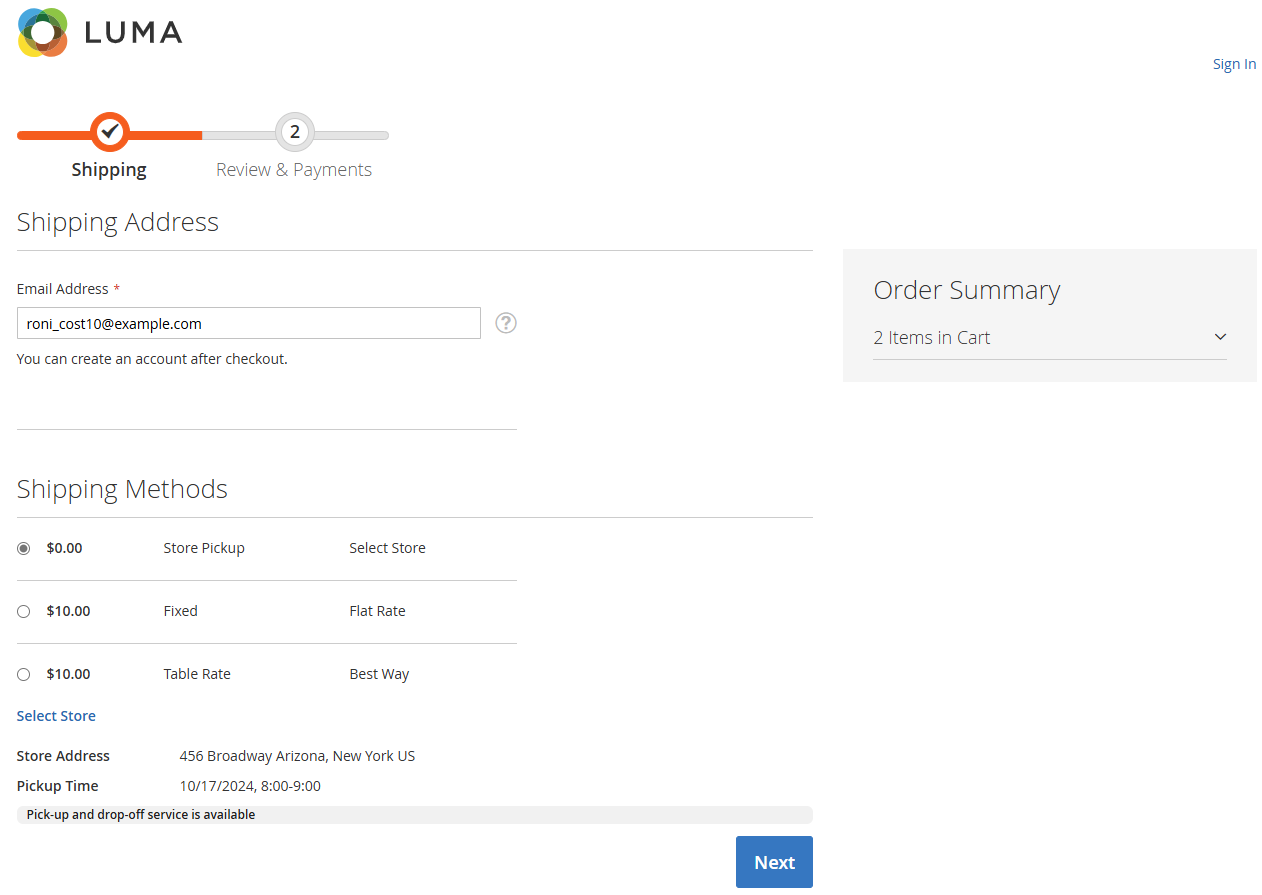
Store Locator and Store Pickup are two tools that complement each other perfectly in the customer journey. While Store Locator helps customers find stores, Store Pickup lets them choose that store as their order collection point at checkout.
Why Combine Them?
- Customers can find the nearest store on the map and select it as their pickup location when shopping online.
- Reduces shipping costs and shortens delivery time.
- Increases cross-selling opportunities when customers visit the physical store.
- Creates a seamless omnichannel shopping experience.
📖 Detailed Guide: To learn how to configure Store Pickup and integrate it with Store Locator, refer to: Store Locator vs Store Pickup - Differences and Setup Guide.
Conclusion
Setting up a Store Locator is honestly one of the easiest ways to bridge the gap between your website and your physical storefront. When you give shoppers a clean map, clear hours, and quick directions, you take all the guesswork out of finding your business.
Just make sure your Google Maps API key is active and throw some local keywords into your store descriptions so Google actually surfaces your pages. Take a few minutes to configure your locations today - making it easy for customers to find you in the real world is always worth the effort.
Table of content

Jacker is the Chief Technology Officer (CTO) at Mageplaza, bringing over 10 years of experience in Magento, Shopify, and other eCommerce platforms. With deep technical expertise, he has led numerous successful projects, optimizing and scaling online stores for global brands. Beyond his work in eCommerce development, he is passionate about running and swimming.
Related Post

16 mins read
|
08-30-2026
5 mins read
|
07-30-2026
7 mins read
|
06-30-2026
How to Enable DebugView in GA4 for your Magento 2 store - Mageplaza
Step-by-step guide to enabling GA4 DebugView for Magento 2 merchants — verify your GA4 events are firing correctly before trusting your data.
8 mins read
|
06-09-2026
Table Rate Shipping in eCommerce: A Practical Guide
Master Magento 2 Table Rate Shipping. Learn how to configure an accurate, automated shipping matrix to optimize your checkout and boost sales.
10 mins read
|
06-02-2026
14 mins read
|
09-30-2026
16 mins read
|
08-30-2026
5 mins read
|
07-30-2026
7 mins read
|
06-30-2026
How to Enable DebugView in GA4 for your Magento 2 store - Mageplaza
Step-by-step guide to enabling GA4 DebugView for Magento 2 merchants — verify your GA4 events are firing correctly before trusting your data.
8 mins read
|
06-09-2026
Table Rate Shipping in eCommerce: A Practical Guide
Master Magento 2 Table Rate Shipping. Learn how to configure an accurate, automated shipping matrix to optimize your checkout and boost sales.
10 mins read
|
06-02-2026