


2 mins read
|
10-30-2026
Opencart vs Shopify: Picking the Perfect E-commerce Partner
Summer Nguyen | 06-19-2024
Opencart and Shopify are two popular e-commerce sites. However, they differ in hosting services and business models. These two platforms also have many advantages and disadvantages. In this article, we will compare Opencart and Shopify. This will help you understand many aspects better and make informed decisions.
Shopify Vs Opencart: Quick Assessment
About Shopify?
Shopify is a platform to sell online. You can be just starting out or can be a big company. With Shopify, you can create your own website. You can do everything from sales to payments and delivery. It’s easy to use and for all businesses sizes. Its customers are small local businesses and well-known brands too. This makes it a versatile solution for selling products online.
About Opencart?
OpenCart is another way to sell products online. It’s like having your workshop where you can make your online store just right for you. You get to pick how everything looks and works. This is perfect for businesses that want a special online store without spending too much money. And if you need help, there are lots of people around to give you tips and support.
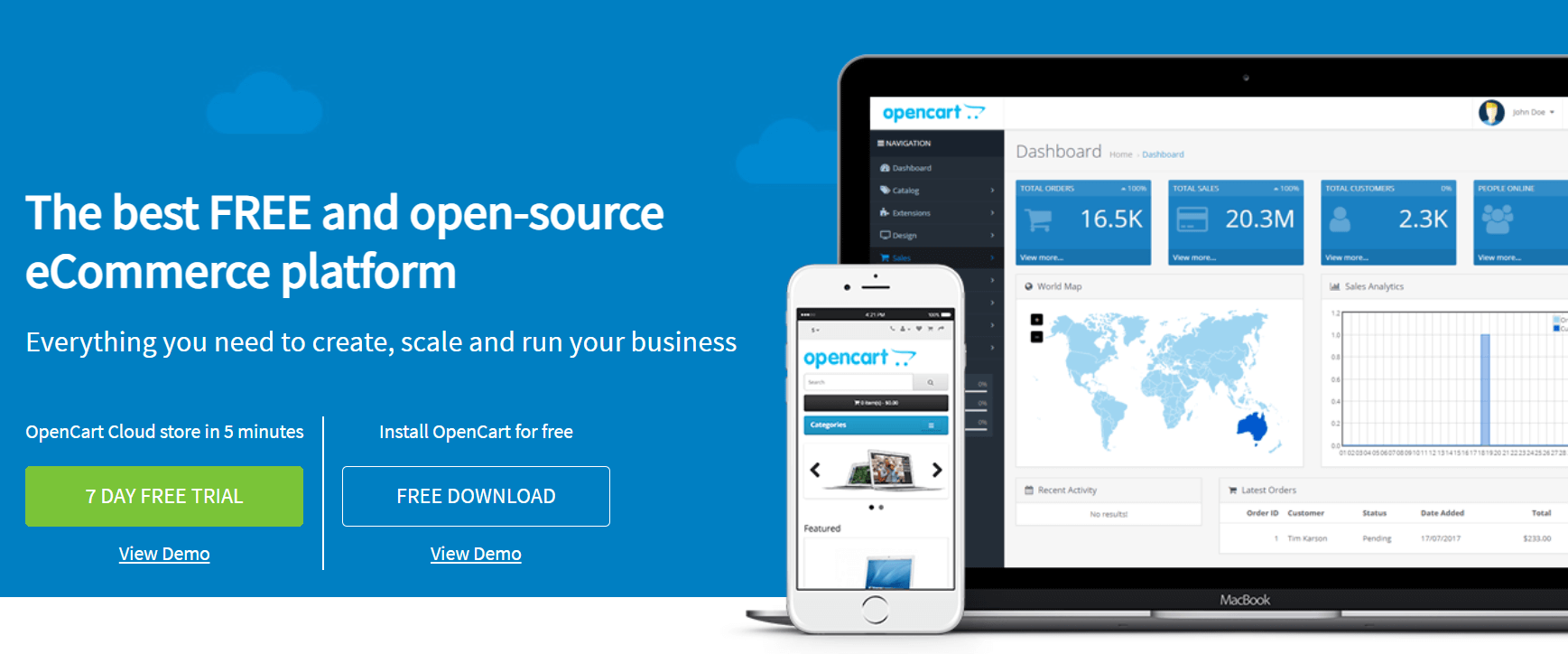
The OpenCart marketplace features 13000+ modules and themes to start
Shopify vs Opencart: Quick Assessment
Shopify and OpenCart are popular for selling online. Each has its own special features:
Shopify:
- Great for making online stores to sell products.
- Lets you easily customize your store’s look.
- Good for any size business that wants to grow.
- Can expand as your business changes.
- Fully hosted, so you don’t need to manage technical products.
OpenCart:
- Flexible platform for creating online stores with many options.
- Businesses want a unique store without spending too much.
- Easy to set up and use. It has lots of themes and add-ons.
- Open-source. It gives you full control over your store.
- Supported by a large community of users and developers.
Here’s a table showing the aspects of Shopify and OpenCart:
| Feature | Shopify | OpenCart |
| Hosting | Shopify takes care of hosting your store | You need to find and manage your own hosting |
| Ease of Use | Very easy to use, good for beginners | Easy to use, but you need some technical know-how to set it up |
| Customization | Lots of options with themes and apps | Tons of options, you can change everything in the code |
| Cost | Monthly plans starting at $29 | Free to use, but you pay for hosting and extra features |
| Scalability | Grows easily with your business | Can grow big, depends on your hosting |
| Support | 24/7 support via chat, email, and phone | Community support, forums, and paid support options |
| Payment Options | Supports over 100 payment methods | Supports many payment methods, often needs add-ons |
| SEO Features | Strong SEO tools and apps | Good SEO with the right add-ons |
| Themes and Templates | Many free and paid themes | Many free and paid themes, highly customizable |
| Extensions and Apps | Lots of apps to add extra features | Thousands of add-ons, many are free |
| Security | High security, includes SSL certificates | Depends on your hosting, needs manual setup |
| Product Management | Easy to manage products and orders | Strong product management, supports large catalogs |
| Analytics and Reporting | Built-in tools for analytics and reports | Basic reports, can add more with extensions |
| Mobile Responsiveness | Mobile-friendly themes, Shopify app | Mobile-friendly themes |
| Multilingual Support | Built-in support for different languages | Needs add-ons for full language support |
| Marketing Tools | Built-in marketing tools like email campaigns | Various marketing add-ons available |
| Customer Reviews | Built-in reviews and ratings | Needs add-ons for advanced review features |
| International Sales | Supports many currencies and languages | Supports many currencies, needs add-ons for languages |
| Updates and Maintenance | Shopify handles updates and maintenance | You need to update and maintain it yourself |
| Learning Curve | Easy to learn and use | Some learning needed, especially for the setup |
| Community and Ecosystem | Big, active community with lots of resources | Big community, active forums, and lots of help available |
Shopify Vs Opencart: The comprehensive comparison
Let’s compare these two platforms specifically and in detail. Are you starting a business? Or have you grown? Don’t miss the content below to find the right platform for your company size.
Pricing structures
OpenCart:
- Free to Download and Use.
- Hosting Costs: $5 to $100 per month.
- Domain Name: $10 to $15 per year.
- Extensions and Themes: Some are free. Others cost $20 to more than $100.
- Custom Development: With special features, costs $20 to $100+ per hour.
- SSL Certificate: Costs $10 to $150 per year, no hosting.
Shopify:
- Basic Shopify Plan: $39 per month.
- Shopify Plan: $105 per month.
- Advanced Shopify Plan: $399 per month.
- Transaction Fees: 2.9% + 30¢ per transaction on the Basic plan. It is lower rates on higher plans.
- Domain Name: About $14 per year.
- Themes: Free themes are available. Premium themes cost $140 to $180.
- Apps and Add-ons: Some are free or cost $10 to more than $50 per month.
- SSL Certificate: Included in all plans.
Verdict: When looking at prices, OpenCart can be cheaper. It’s free to use. But you will need to pay for hosting, domain, and any extra features or custom work. Shopify has clear monthly plans. It includes hosting, SSL, and basic features. Choose OpenCart if you control everything with less money. Choose Shopify if you want an easy solution.
Read more: Shopify vs Shopify Plus: Key Differences (2024)
Customization options
OpenCart :
- Total Control with Code: OpenCart lets you change everything since it’s open-source.
- Add-ons: Thousands of add-ons for extra features.
- Custom Work: You can hire experts to make special changes.
- Multistore Support: Manage lots of stores in one place with different looks.
- Product Management: Lots of ways to organize and show off your products.
- Checkout: Make the buying process fit your style.
- Languages and Currencies: Sell in different languages and currencies easily.
Shopify :
- Apps: Many apps to add extra features.
- Customize without Coding: Easy tools to make changes without knowing the code.
- Drag-and-Drop Builder: Move things around with a click.
- Integrate with Other Tools: Connect with other services easily.
- Product Management: Easy way to organize and show your products.
- Checkout: Limited changes, but apps can help.
Verdict: OpenCart gives you lots of options but needs some tech skills. Shopify is simpler to use and still, you customize. Pick OpenCart for full control. Choose Shopify for an easier way without the tech hassle.
Scalability
OpenCart:
- Work well for small, medium, and large businesses.
- It’s good for starting small and expanding later on.
- You can easily upgrade your hosting as your business grows.
- Run several stores from one place, handy for growing into new markets.
- Lots of people to ask for advice and help as you grow.
Shopify Scalability:
- Shopify is made to handle businesses from tiny to huge.
- It stays strong even when lots of people visit your site.
- You can pick the plan that matches your size and needs.
- Add extra features to your store as you grow.
- Shopify Plus gives extra support to really big stores.
Verdict: Both OpenCart and Shopify can grow with your business. OpenCart gives you lots of options and flexibility as you grow, while Shopify is a solid, reliable choice with extra support for really big businesses. Choose OpenCart if you want lots of control and flexibility. Pick Shopify if you want a stable, easy-to-use platform.
App integrations
OpenCart:
- You can find extra features for your store here.
- Other developers offer extra features you can add to your store.
Shopify:
- There are lots of apps here to add features to your store.
- You can find apps for marketing, sales, shipping, and more.
- Connect with big services like Mailchimp, Oberlo, and Klaviyo.
Verdict: Both OpenCart and Shopify offer ways to add extra features to your store. Shopify has more options. Choose Shopify if you want choices and easy connections.
Payment gateways
OpenCart:
- There are PayPal, Stripe, Authorize.net,…
- Connect with payment from around the world.
Shopify:
- Pick from Shopify Payments, PayPal, Stripe,…
- Use Shopify Payments for a simple setup.
Verdict: Both OpenCart and Shopify let you use different payment methods. Shopify is easier to set up and has its own payment option. Pick Shopify if you want something simple.

Manage your money with comprehensive dashboards with Shopify
Hosting options
OpenCart:
- You need to find a company to host your site.
- You decide how much space and power your site needs.
Shopify:
- Shopify takes care of hosting for you.
- They handle everything, like security and updates.
Verdict: OpenCart lets you choose your hosting, so you have more control. Shopify handles everything for you, so it’s easier.
Support and community
OpenCart:
- Forums: OpenCart has forums where users can ask questions and get help.
- Guides: They provide guides to help users solve problems and learn.
- Extensions Marketplace: You can find lots of extra features for your store here, supported by developers and users.
- User Contributions: People share tips and tools to help each other in the community.
Shopify:
- 24/7 Help: Shopify has round-the-clock support through chat, email, and phone.
- Help Center: They offer lots of guides and FAQs for self-help.
- Community: You can connect with other users and experts in the Shopify Community forums.
- App Store: There are thousands of apps here, supported by developers and Shopify experts.
Verdict: Both OpenCart and Shopify have good help and communities. OpenCart has forums and guides, while Shopify offers 24/7 support and a big community. Choose OpenCart for lots of user help and extensions. Pick Shopify for professional support and a big network of experts.
SEO capabilities
OpenCart:
- Good URLs: You can customize URLs to help people find your site in searches.
- Meta Tags: Add tags to products and pages to boost your search ranking.
- Extra Tools: There are more tools available in the marketplace for better SEO.
- Sitemaps: OpenCart makes sitemaps automatically to help search engines find your site.
Shopify SEO Capabilities:
- Clean Code: Shopify has clean code and designs that search engines like.
- Tags: Add tags to your products and pages to improve search results.
- Automatic Help: Shopify sets up sitemaps and other things automatically for better SEO.
- Apps: There are lots of apps available to help you with SEO and analytics.
Verdict: Both OpenCart and Shopify can help with SEO. OpenCart lets you customize more. Shopify is easier to use and sets up some things for you automatically.
Theme variety
OpenCart:
- Marketplace: You can find lots of themes here with different looks and features.
- Third-Party Options: There are themes made by other people too, giving you more choices.
- Customizable: You can change these themes to fit your brand better.
Shopify:
- Theme Store: There are tons of themes here for different industries and styles.
- Professional Designs: Shopify themes look good and work well on phones and tablets.
- Customizable: You can change how these themes look to match your store.
Verdict: Both OpenCart and Shopify have lots of themes to pick from. OpenCart has more options. Shopify has professional designs and easier customization.
Read more: How to Master Shopify Theme Development Local
Security
OpenCart:
- Users need to handle security updates and patches themselves.
- Be careful with third-party add-ons. They can sometimes cause security issues.
- Works with SSL certificates for safe data transfers.
Shopify:
- Shopify takes care of updates automatically, reducing risks.
- Shopify’s hosting is designed to keep your store safe from attacks.
- Shopify follows PCI standards, ensuring secure payment transactions.
Verdict: Shopify is safer since it manages security for you. OpenCart needs more attention to stay secure.
Product Management
OpenCart:
- It is easy to use for managing products, categories,…
- You can update lots of products at once using CSV files.
- Create your own product details to match your needs.
- Handle many stores in one place.
Shopify:
- Adding and organizing products is straightforward with Shopify.
- Offer different versions of products with ease.
- Follow stock levels and get alerts for low inventory.
- Manage products from anywhere with the Shopify mobile app.
Verdict: Both OpenCart and Shopify are good for managing products. OpenCart has more features for handling multiple stores and customizing products.
Analytics and Reporting
OpenCart:
- OpenCart gives you basic sales and customer reports.
- You can get more analytics tools from third-party add-ons.
- You can connect OpenCart with Google Analytics for more insights.
Shopify:
- Shopify offers advanced reports on sales, customer behavior, and marketing.
- Make your own dashboards to track.
- Check your store’s performance with the Shopify mobile app.
Verdict: Shopify has better analytics and reports built-in. OpenCart needs add-ons for more advanced insights.
Mobile Responsiveness
OpenCart:
- Adaptable Themes: OpenCart themes adjust to different screens, making browsing easy on mobile devices.
- Simple Checkout: Buying is easy on phones and tablets with optimized checkout.
- Customizable: Change how your store looks on mobile to match your style.
Shopify:
- Optimized Themes: Shopify themes work well on all devices. Customers will have a good experience.
- Fast Pages: Shopify pages load quickly on mobile. Your customers will not wait long.
Verdict: Both OpenCart and Shopify work well on mobile. Shopify has an app for managing your store on the go. OpenCart lets you customize your mobile store more.
Multilingual Support
OpenCart:
- Language Packs: OpenCart lets you use different languages with language packs.
- Extras: Add more language features with add-ons from the OpenCart store.
- Customization: Change settings to match different languages and currencies.
Shopify:
- Language Options: Shopify supports many languages, so you can translate your store easily.
- Apps: Use apps from the Shopify store to translate your store and make it work for different countries.
- Automatic Changes: Shopify shows your store in the right language and currency based on where customers are.
Verdict: Both OpenCart and Shopify let you make stores in different languages. OpenCart gives you more control. Shopify makes things easier with automatic settings.
Customer Reviews
OpenCart:
- Review Add-Ons: You can add customer reviews to your OpenCart store with extra tools.
- Manage Reviews: Keep track of what customers say and control what gets shown.
- Connect with Other Platforms: Import reviews from other places to build trust with customers.
Shopify:
- Built-In Reviews: Shopify has reviews built-in, so customers can leave feedback easily.
- Make It Yours: Customize how reviews look on your store to fit your style.
- Extra Help: Use apps to do more with reviews and connect with other review sites.
Verdict: Both OpenCart and Shopify let customers leave reviews. Shopify makes it easy with built-in features. OpenCart gives you more options for customizing and adding reviews from other places.
International Sales
OpenCart:
- Different Currencies: OpenCart lets customers pay in their own currency, making it easier for international buyers.
- Many Languages: You can make your store in different languages with OpenCart, so more people can understand.
- Shipping Choices: OpenCart has lots of shipping options, so you can send orders anywhere in the world.
Shopify:
- Global Payments: Shopify accepts payments from around the world, so you can sell to anyone.
- Local Checkout: Customers can buy in their own language and money, which makes shopping easier.
- Easy Shipping: Shopify helps with shipping, so you can send packages to customers anywhere.
Verdict: Both OpenCart and Shopify help with international sales. Shopify is simpler and better for global selling. OpenCart offers more customization options.
Updates and Maintenance
OpenCart:
- You Update: You need to update your OpenCart store by yourself when new versions come out.
- Check Add-Ons: After updates, make sure any extra things you added still work.
- Keep it Running: Regular checks and updates help keep your OpenCart store working smoothly.
Shopify:
- Automatic Updates: Shopify updates itself, so you always have the newest version without doing anything.
- Apps Still Work: Shopify makes sure any apps you add still work after updates.
Verdict: Shopify makes updates and maintenance easy by doing it automatically. OpenCart needs you to do more, like checking updates and making sure everything still works. If you want things simple, go for Shopify. If you like more control, OpenCart is the way to go.
Opencart Vs Shopify: Choosing the Right E-commerce Platform
| OpenCart | Shopify | |
| Pros | – Provides extensive customization options. | – Offers flexibility in design and functionality. |
| – Lower initial cost for small businesses. | – Offers various pricing plans suitable for different budgets. | |
| – Can handle various types of stores. | – Supports different types of businesses. | |
| – Intuitive interface for store management. | – Easy setup and management for users. | |
| – Requires self-hosting, providing control over hosting. | – Hosts the store, reducing the need for technical management. | |
| – Offers a range of extensions and modules. | – Extensive selection of apps and integrations. | |
| Cons | – Requires technical knowledge for setup. | – Limited customization options compared to OpenCart. |
| – Support may be limited compared to other platforms. | – Transaction fees for using external payment gateways. | |
| – Users need to manually update the platform. | – Monthly fees for using the platform. |
OpenCart is ideal for businesses that:
- Prefer straightforward and budget-friendly solutions.
- Small businesses or individuals starting out online.
- Those targeting specific local markets or regions.
- Don’t need extensive customization or advanced features.
When to choose OpenCart:
- You’re just starting and need something simple.
- Your target customers are in specific local markets or regions.
- You have a limited budget and want to keep costs low.
- You’re comfortable with basic features and fewer customization options.
Shopify is best suited for businesses that:
- Have the budget to invest in their online presence.
- Aim for significant growth and want to reach a global audience.
- Need a wide range of tools and options to manage their store effectively.
When to choose Shopify:
- You’re ready to invest more in extra features and customization.
- You want to expand internationally and target a global audience.
- You need access to a variety of tools and options for effective store management.
- You prefer 24/7 support and assistance whenever you need it.
Conclusion
In conclusion, both OpenCart and Shopify offer good options. They can fit different types of businesses. Shopify lets you change your store’s look in many ways. OpenCart is simpler and suits people or small businesses. When deciding between them, think about what your business needs most. Consider all the comparisons we talked about earlier to make the right choice.
Table of content

Summer is the CMO and Digital Commerce Solution Expert with 10+ years of experience. She specializes in Magento, Shopify, ERP, CRM, AI, and Blockchain, delivering strategic solutions that transform businesses. With a deep understanding of digital commerce, she helps brands scale and stay ahead in a competitive market.
Related Post

15 mins read
|
09-30-2026
16 mins read
|
08-30-2026
5 mins read
|
07-30-2026
7 mins read
|
06-30-2026
How to Enable DebugView in GA4 for your Magento 2 store - Mageplaza
Step-by-step guide to enabling GA4 DebugView for Magento 2 merchants — verify your GA4 events are firing correctly before trusting your data.
8 mins read
|
06-09-2026
2 mins read
|
10-30-2026
15 mins read
|
09-30-2026
16 mins read
|
08-30-2026
5 mins read
|
07-30-2026
7 mins read
|
06-30-2026
How to Enable DebugView in GA4 for your Magento 2 store - Mageplaza
Step-by-step guide to enabling GA4 DebugView for Magento 2 merchants — verify your GA4 events are firing correctly before trusting your data.
8 mins read
|
06-09-2026