


2 mins read
|
10-30-2026
High-Ticket Affiliate Marketing for Magento 2: A Merchant's Guide
Summer Nguyen
|
09-28-2026


Source
Source
Source
Source

Expensive products take longer to sell. Buyers compare, read reviews, and wait before they trust a brand with $2,000. That means a longer journey and a higher cost per customer.
High-ticket affiliate marketing hands part of that journey to partners who already have the buyer’s trust: reviewers, consultants, industry publishers, existing customers. They educate, the store converts, and the merchant pays only for qualified sales.
This guide covers what high-ticket affiliate marketing means for a Magento merchant, when it pays off, how to structure a program that stays profitable, and four commission mechanics worth borrowing from programs that already work at scale.
Quick answer for merchants
- High-ticket means high order value and enough margin to reward partners. Price alone is not enough.
- Design commission around margin, not around what competitors advertise.
- Set a 60 to 90-day cookie and hold commission until the return window closes.
- Recruit ten affiliates with the right audience rather than a hundred with reach.
Quick answer for merchants
- High-ticket means high order value and enough margin to reward partners. Price alone is not enough.
- Design commission around margin, not around what competitors advertise.
- Set a 60 to 90-day cookie and hold commission until the return window closes.
- Recruit ten affiliates with the right audience rather than a hundred with reach.
What is high-ticket affiliate marketing?
An affiliate model built around products or services with high transaction or customer value. The process is the same as any affiliate program: tracked links, attributed sales, agreed commission. The difference is the buying journey.
A $20 accessory sells off a social post. A $2,000 camera, a luxury ring, or a B2B system sells off research. So high-ticket programs run on trust, expertise, and audience fit rather than on traffic volume.
| Traditional affiliate | High-ticket affiliate | |
|---|---|---|
| Product value | Low to moderate | Moderate to very high |
| Purchase decision | Quick | Considered |
| Payout per sale | Small | Large |
| Content that converts | Deals, lists, social posts | In-depth reviews, comparisons, demos |
| Best partners | Broad range | Niche publishers, experts, creators |
| Merchant priority | Volume and conversion | Profitability and qualified referrals |
There is no fixed price that makes a product high-ticket. $500 is high-value in one category and ordinary in another. What matters is the economics: order value, margin, lifetime value, and how much consideration the purchase needs.
Is it right for your Magento store?

It works when one conversion leaves enough margin to reward a partner and still profit. Four kinds of catalog fit:
- Luxury and premium goods. Jewelry, watches, designer items, premium furniture. Buyers research for weeks; category specialists build confidence before the store does.
- Electronics and professional equipment. Cameras, audio, drones, fitness gear. Reviewers explain specs, compare alternatives, and answer the questions a product page cannot.
- B2B and industrial products. Large Magento and Adobe Commerce catalogs of equipment, parts, and supplies. Consultants and trade publishers become referral partners.
- Products with recurring services. Subscriptions, maintenance, consumables, upgrades. Here lifetime value, not the first order, sets what the merchant can afford to pay.
What the channel adds over paid ads: a partner the buyer already trusts, and a cost paid only after the sale, one of the core benefits of affiliate marketing for brands.
High-ticket does not mean high percentage:
$200 order × 15% = $30 to the affiliate
$2,500 order × 6% = $150 to the affiliate
The second pays the affiliate five times more at less than half the rate.
How to build a high-ticket affiliate program for Magento
Start with the store’s economics, not the percentage on the recruitment page.
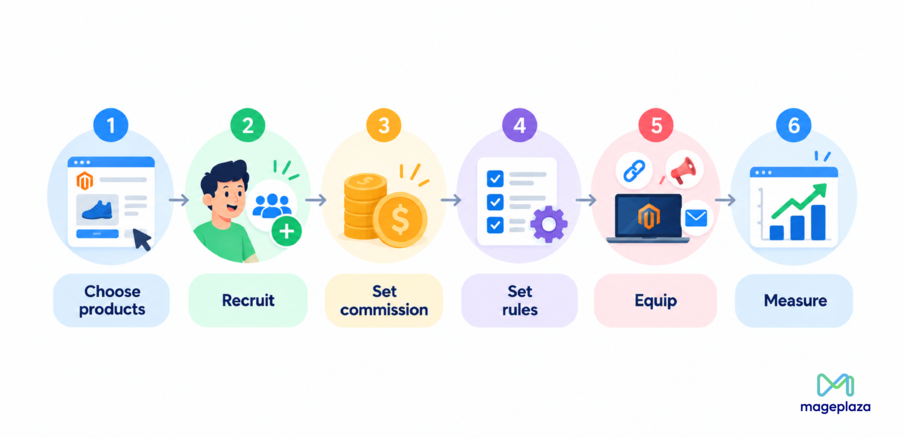
1. Choose the right products
Check average order value, gross margin, conversion rate, refund rate, lifetime value, and repeat-purchase potential.
💡 Product A sells for $3,000 on a thin margin; 10% commission makes it unprofitable. Product B sells for $1,200 on a healthy margin with repeat purchases; it supports a better offer. High price is not high affiliate potential.
New to the channel? Start with the fundamentals in how to create an affiliate program.
2. Recruit on audience fit, not reach
For expensive products, quality beats quantity. Candidates: product reviewers, industry publishers, consultants, niche bloggers, existing customers, complementary businesses, professional communities.
Three questions before approving anyone: Who is their audience? Why does that audience trust them? Does their content naturally influence this kind of purchase?
3. Design commission around margin
One rate for a $40 accessory, a $700 product, and a $4,000 system rarely makes sense. Typical ranges reported by affiliate software vendors such as Post Affiliate Pro and Tapfiliate:
| Category | Commonly reported rate |
|---|---|
| Physical goods (general) | 5% to 20% |
| Electronics | Up to 10% |
| Fashion, beauty | 8% to 18% |
| B2B products | 1% to 10% |
Reference points, not targets. Work the chain instead: category → margin → order value → customer value → what the affiliate contributed. Then pick percentage, fixed, separate campaigns, or performance tiers, and raise rates for partners who earn it rather than offering the top rate to everyone on day one.
4. Define attribution, returns, and payout rules
Before launch, write down what counts as a qualifying referral, when commission becomes eligible, how refunds are handled, minimum payouts, holding periods, and affiliate restrictions.
Two settings matter most for expensive products:
- Cookie duration. A $4,000 buyer rarely converts on the first visit. A 7 or 30-day cookie leaves affiliates uncredited for sales they influenced, and good partners leave. High-consideration programs run 60 to 90 days.
- Holding period. Paying $300 the moment an order is placed is a gift if the customer cancels. Match the hold to the return window so commission unlocks only when the order can no longer be refunded.
Configuration details are in the guide to managing Magento 2 affiliate programs.
5. Give affiliates enough to sell with
A bare link does not close a considered purchase. Provide specs, professional images, comparisons, demo material, FAQs, use cases, brand guidelines, and banners. The goal is accurate inputs for useful content, not a script.
6. Measure profitability, not revenue
$100,000 in attributed revenue is not better than $50,000 if the commissions, refunds, and cannibalised customers are worse. Track per affiliate and per campaign:
- Referred orders, conversion rate, average order value
- Commission cost and refund rate
- New-customer share
- Margin after commission
5 commission structures from real programs
How much should one sale pay, and to whom? Each program below answers differently. None calls itself high-ticket; each mechanic scales to an expensive catalog.
Liquid Web: commission grows with order value, up to a cap
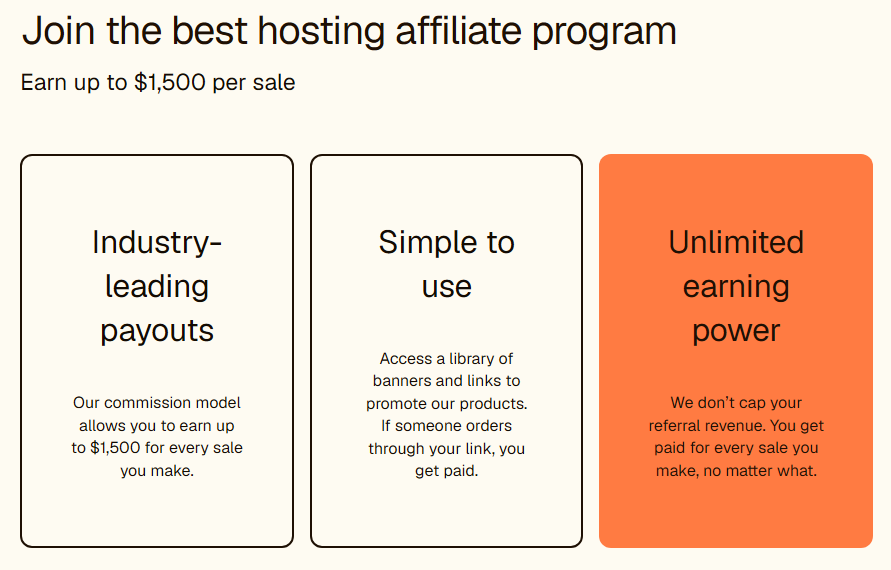
Liquid Web, whose hosting range includes managed Magento, pays affiliates 150% or more of the sale, up to $1,500 per referral, with a 90-day cookie. A referral to a small VPS plan earns a modest commission; a referral to a managed Magento cluster earns near the cap. Same program, same cookie; the payout tracks the order.
💡 The rule to copy: let commission scale with order value, then put a ceiling on it so one very large order does not blow the budget. Liquid Web also keeps its customer Refer-a-Friend offer ($100 in hosting credit) separate from the affiliate program. Different audiences, different terms.
Coleman Furniture: a low percentage on a high order value
Coleman Furniture, a US online furniture retailer, advertises “up to 3% commission” to affiliates. On its own that number would attract nobody. The same page explains why it works: average order value is $1,800.
| Coleman Furniture | Typical apparel program | |
|---|---|---|
| Commission rate | Up to 3% | 10% |
| Average order | $1,800 | $150 |
| Affiliate earns per order | ~$54 | $15 |
| B2B products | 1% to 10% |
The program runs on Rakuten Advertising with a dedicated affiliate manager, seasonal promotions, and product gifting for creators. “Up to” signals that 3% is a ceiling for proven partners, not a flat rate for everyone.
💡 For bulky, expensive goods with thin margins: keep the percentage low to protect margin, let the order value make the payout attractive, and invest in relationship support rather than in rate.
Cloudways: affiliates pick a one-time bounty or recurring share

Cloudways, managed hosting for Magento and WordPress, offers affiliates two main models at signup: a Slab bounty of up to $125 per sale, rising with monthly volume, or a Hybrid of $30 now plus 7% of the customer’s bill for life. A reviewer with a burst of traffic takes the Slab. A consultant who refers three clients a year takes the Hybrid. Affiliates who pick the model that fits their audience stay active longer.
💡 A store selling equipment plus consumables or service contracts can run the same fork: fixed bounty on the equipment, or smaller bounty plus a share of that customer’s repeat purchases for a year.
QP Jewellers: one public rate, better rates for proven partners
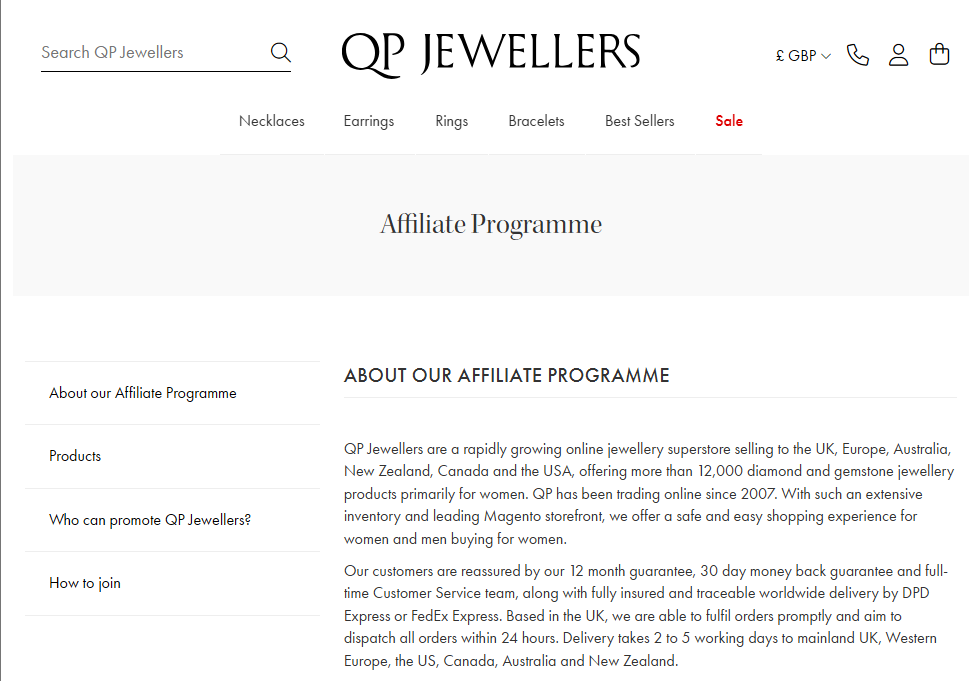
QP Jewellers, a UK online jewelry retailer with more than 12,000 diamond and gemstone products on a Magento storefront, starts every affiliate at a flat 9% on validated sales through Awin. Affiliates who prove they can move considered purchases are then offered exclusive rates that are not published.
On a £300 pendant, 9% is £27; on a £3,000 diamond ring it is £270. QP keeps its best rates for partners who consistently send ring buyers rather than advertising them to everyone.
💡 For a catalog with a wide price spread: one simple public rate to recruit, negotiated rates to retain.
HubSpot: recurring commission, capped at 12 months
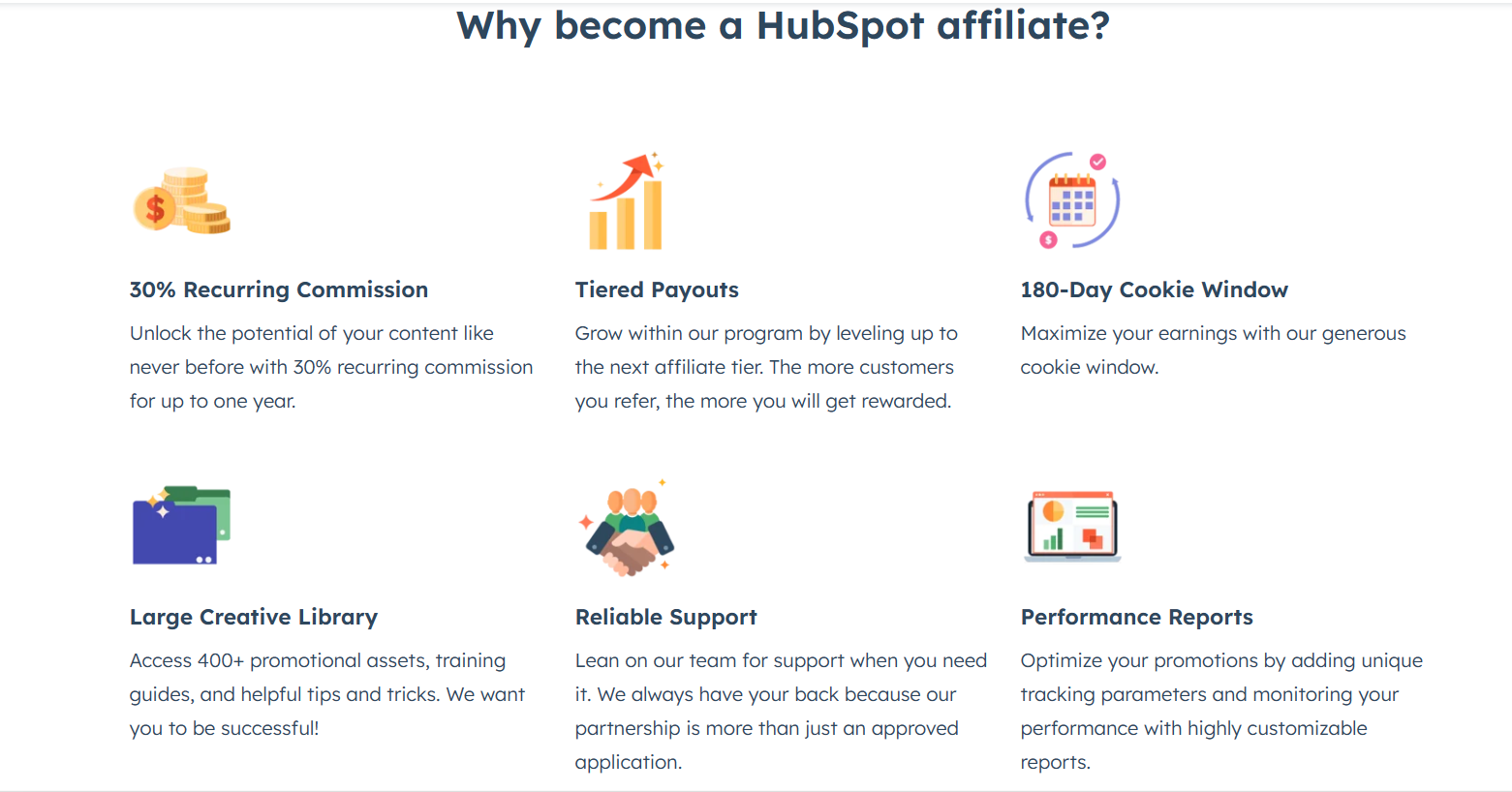
HubSpot pays 30% recurring, but only for up to 12 months, with a 180-day cookie. The program works because HubSpot customers stay for years and paid plans climb into thousands a month. Recurring commission is not a rate. It is a bet on retention, and the 12-month cap is HubSpot hedging it.
💡 Make the same bet only where repeat purchases can be measured. Where the data is thin, a one-off commission with a longer cookie is safer.
Common high-ticket affiliate marketing mistakes
| Mistake | Why it hurts | Fix |
|---|---|---|
| Choosing products by price alone | Thin margin or high returns kill the economics | Screen on margin, returns, and conversion |
| Recruiting on reach | Big audiences that do not buy | Screen on audience fit |
| One rate for the whole catalog | Overpays on some products, unattractive on others | Separate campaigns or tiers |
| Paying before orders settle | Refunds on $4,000 orders come out of the merchant's pocket | Hold commission through the return window |
| Ignoring disclosure | FTC endorsement rules and equivalents apply to the merchant too | Require disclosure in affiliate terms |
| Measuring revenue, not profit | High-revenue affiliates can be net losers | Review margin after commission and refunds |
More program-level pitfalls are covered in common affiliate marketing mistakes.
Managing a high-ticket program in Magento 2
Once a program has more than a handful of affiliates, spreadsheets stop working. The merchant needs to answer, per order: which campaign, how much commission, when it unlocks, what happens on refund, and which partners actually drive sales.
The Magento 2 Affiliate Extension by Mageplaza handles this inside Magento: campaigns, percentage or fixed commissions, multiple tiers, referral links and banners, withdrawal rules, automatic deduction on refunds, and performance reports. Current compatibility: Magento 2.4.x, Hyvä Theme, Hyvä Checkout.
Still deciding between managing affiliates inside Magento and using a third-party platform? See affiliate management software solutions.
FAQs
What counts as a high-ticket affiliate product?
No fixed threshold. High transaction or customer value within its category, with enough margin to fund a meaningful commission.
Is high-ticket affiliate marketing suitable for Magento stores?
Yes, especially for premium goods, electronics, professional equipment, and B2B. Check margin, conversion, returns, and lifetime value first.
How much commission should a merchant offer?
Whatever margin, order value, acquisition cost, and lifetime value can sustain. There is no universal rate.
Should every product carry the same commission?
Rarely. Use separate campaigns or tiers, as Helly Hansen does by affiliate type or Cloudways by payout model.
When should commission be paid?
After the order is validated and the refund window has passed.
Is affiliate management software necessary?
Not for a handful of affiliates. It becomes necessary as affiliates, campaigns, and payouts multiply.
Final thoughts
High-ticket affiliate marketing is not about bigger commissions on bigger prices. It is a partner channel where product economics, affiliate quality, and commission structure have to fit together.
Start with a few products whose margin justifies the cost. Recruit partners whose audience matches the buyer. Equip them properly. Test the commission structure before scaling, and measure profit, not revenue. Once it grows, managing campaigns, commissions, and payouts inside Magento is what keeps the channel under control.
Table of content

Summer is the CMO and Digital Commerce Solution Expert with 10+ years of experience. She specializes in Magento, Shopify, ERP, CRM, AI, and Blockchain, delivering strategic solutions that transform businesses. With a deep understanding of digital commerce, she helps brands scale and stay ahead in a competitive market.
Related Post

15 mins read
|
09-30-2026
16 mins read
|
08-30-2026
5 mins read
|
07-30-2026
7 mins read
|
06-30-2026

How to Enable DebugView in GA4 for your Magento 2 store - Mageplaza
Step-by-step guide to enabling GA4 DebugView for Magento 2 merchants — verify your GA4 events are firing correctly before trusting your data.
8 mins read
|
06-09-2026
2 mins read
|
10-30-2026
15 mins read
|
09-30-2026
16 mins read
|
08-30-2026
5 mins read
|
07-30-2026
7 mins read
|
06-30-2026
How to Enable DebugView in GA4 for your Magento 2 store - Mageplaza
Step-by-step guide to enabling GA4 DebugView for Magento 2 merchants — verify your GA4 events are firing correctly before trusting your data.
8 mins read
|
06-09-2026